




Summary:
- Why do children’s eyes need maximum sun protection?
- Sunglasses: the right habit from an early age
- Children's sunglasses: certifications and standards to check
- Should you choose polarized lenses for a child?
- How to choose the ideal frame for a child?
- Which brand of sunglasses should you choose for a child?
- FAQ: guide to choosing safe and certified children's sunglasses
Scrolling through sunglasses models online to protect your little adventurer's eyes can sometimes feel like a puzzle. Between technical terminology and the fear of choosing the wrong size, it’s easy to hesitate. However, finding a stylish and ultra-comfortable pair of sunglasses for your child from your sofa is perfectly possible. It’s actually an excellent way to take the time to compare models calmly and identify mandatory certifications.
Ki ET LA is here to help you see things more clearly.
Key takeaways:
- Sunglasses are essential because children's lenses do not effectively filter UV rays until the age of 12
- Prioritize children's sunglasses that are CE or UKCA certified, featuring at least category 3 lenses (100% UV protection)
- A good pair of sunglasses must offer a covering shape adapted to the child's facial structure
Why do children’s eyes need maximum sun protection?
Your child's visual system is in full development, making it particularly sensitive to the sun's rays. Did you know? A child's lens does not reach full maturity until the age of 12. In babies, this natural filter is still too permeable: the vast majority of UVA and UVB rays pass through it and reach the retina directly. Protecting your child from an early age with good sunglasses means reducing the risk of future damage.
Sunglasses: the right habit from an early age
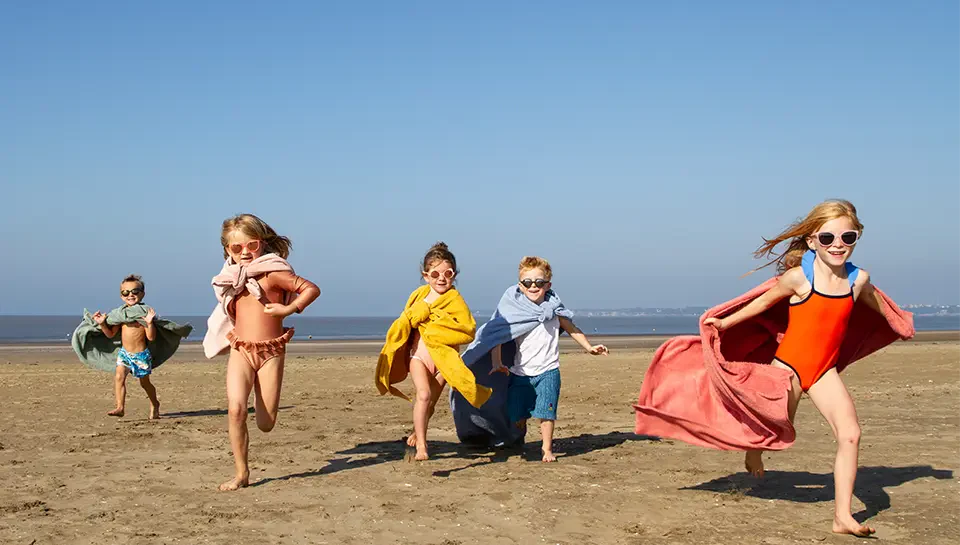
The goal is to adopt the sunglasses habit from the very first months to keep your children's eyes in perfect health for their entire lives. In addition to direct light, your little ones have to deal with a particularly hostile environment during their outings. Water, sand, and snow act like real mirrors. By managing these reflections, a good pair of sunglasses prevents visual fatigue and offers absolute comfort. It’s the secret to ensuring your little adventurers enjoy every walk to the fullest and explore the world in complete freedom!
Children's sunglasses: certifications and standards to check
Buying sunglasses online simply requires keeping an eye on a few safety criteria. To protect your child's eyes, two elements should absolutely grab your attention:
CE marking
The first reflex is to look for the CE or UKCA marking, which attests to the product's compliance with safety requirements. It is the essential indicator to ensure that the model fully respects European manufacturing standards. To go even further in quality requirements, you can also look for sunglasses made in France.
Lens category
To guarantee the safety of your child's eyes, choose sunglasses equipped with category 3 lenses. They filter 100% of UV rays, which provides the ideal protection for outings to the beach, the park, or the mountains without excessively darkening their vision.
Should you choose polarized lenses for a child?
Polarized lenses are very pleasant, as they cut reflections from water or sand and improve visual comfort. However, at Ki ET LA, we choose to offer them from age 4 in the Vibe and Iconik ranges. Why? Simply because before this age, your child's eyes are still in full development. Since polarized lenses slightly alter contrasts and colors, they are not suitable for toddlers. To grow properly, your child's visual system needs to receive completely natural images, without any filter. It is only later, around the age of 4, that polarized lenses become truly beneficial to accompany their adventures and games in direct sunlight.
How to choose the ideal frame for a child?
Because your children's sunglasses will live a thousand and one lives (and probably a few drops), the structure of the frame is just as important as the lenses. Here are the criteria to consider
|
Selection criteria |
Why it is important |
|
Coverage |
Children spend their time looking up at the sky. The mask must be well-adjusted on the nose and around the eyebrows to block UV rays. |
|
Hinge-free |
No screws, no metal. That ensures zero pinching. |
|
Rounded shape |
Before 2 years old, babies do not yet have a nasal bridge. Rounded shapes prevent the glasses from slipping. |
|
Flexibility of the temples |
They must ensure a gentle hold, without exerting uncomfortable pressure on the child's temples. |
Good to know
A classic rigid frame risks breaking or injuring your child's face if they fall or sit on them. This is why choosing unbreakable and flexible sunglasses is highly recommended.
Which brand of sunglasses should you choose for a child?
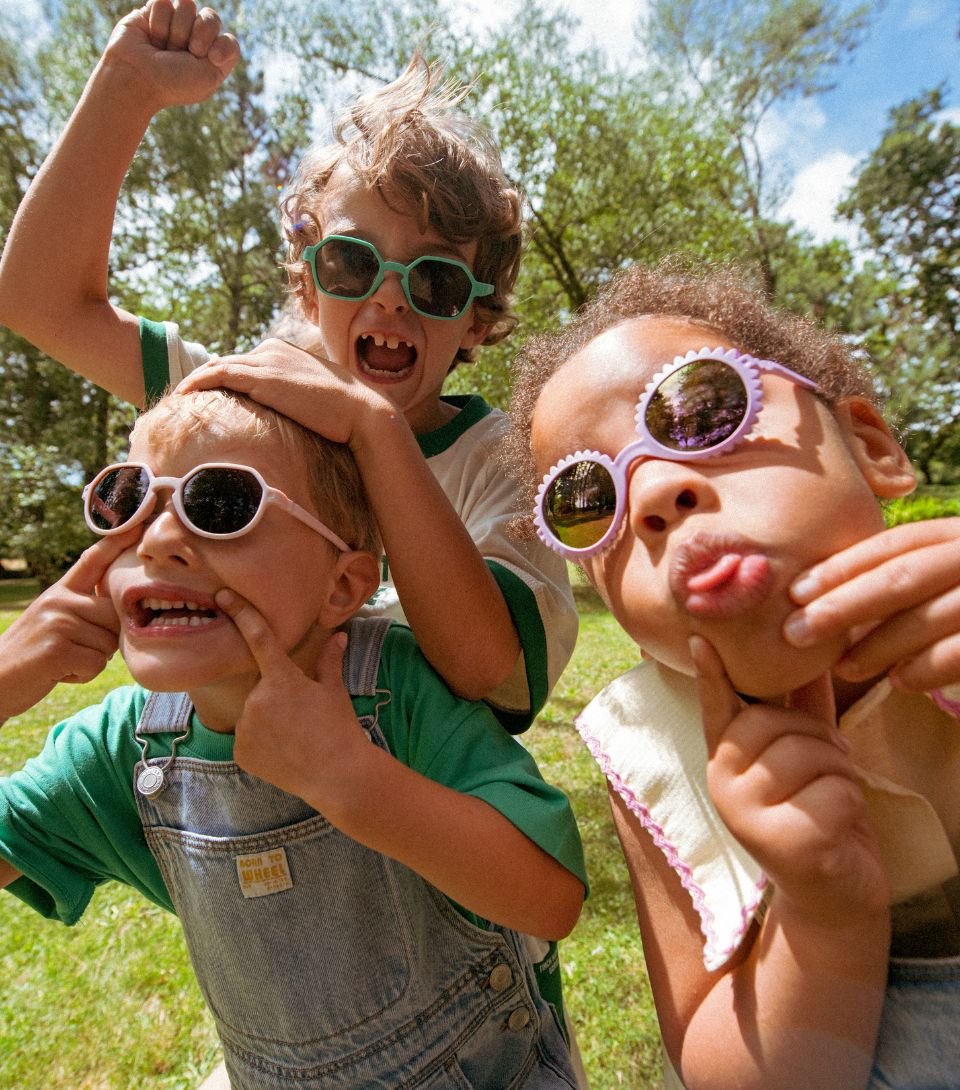
To provide the best for your little adventurers, the secret is to turn to a specialized brand that checks all the boxes for safety and comfort. At Ki ET LA, all our collections are CE certified and equipped with category 3 lenses to filter 100% of UV rays. Better yet: each frame is specifically designed to perfectly fit the shape of your child's face, ensuring an impeccable hold without ever squeezing. All you have to do is choose according to their age:
- Do you have an infant? Getting them to wear cute baby sunglasses (0 to 1 year old) is essential for protecting their eyes during their first walks, with style as a bonus!
- For budding explorers who love to test gravity, bet with your eyes closed on our range of children's sunglasses (1 to 4 years old) that are ready to withstand anything.
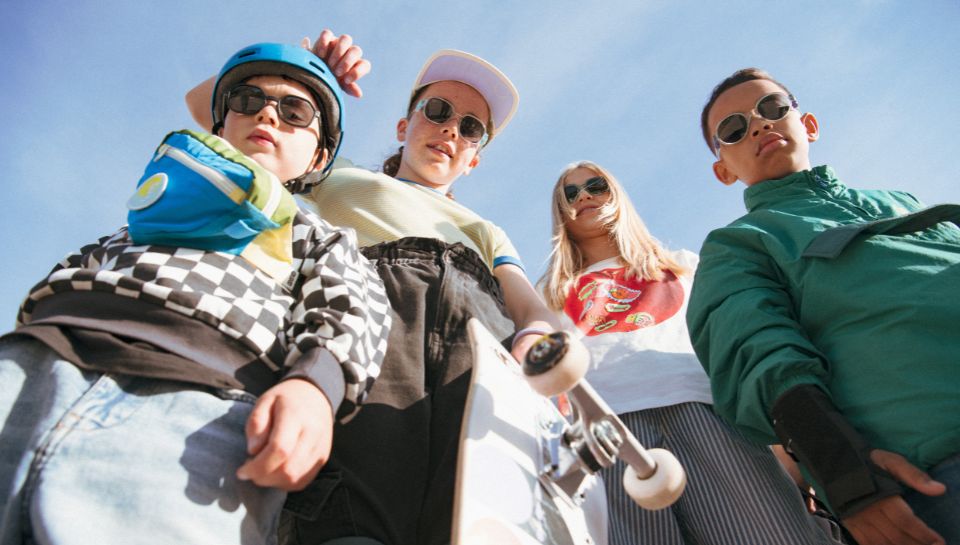
- Finally, for older kids who are starting to assert their own style, our junior sunglasses (4 to 12 years old) are the perfect allies: they combine ultra-trendy frames with 180° flexible temples, capable of following all their adventures, even the most hectic ones.
FAQ: guide to choosing safe and certified children's sunglasses
How do you know if sunglasses for children offer good UV protection?
Rely only on product pages that display category 3 lenses that filter 100% of UV rays.
Which standards or certifications guarantee the safety of children's sunglasses?
Look for the official CE or UKCA logos, which are mandatory requirements for total safety.
Why should you avoid novelty or low-quality sunglasses?
These glasses tint the lens without filtering UV rays, which tricks the eye, dilates the pupil, and allows harmful sun rays to penetrate.
At what age can a child start wearing polarized lenses?
From age 4, once their visual system is more mature.