








SUMMARY:
Getting a baby to wear sunglasses can quickly turn into an impossible mission. Between little hands constantly taking them off, tears, and categorical refusal, many parents find themselves at a loss when faced with this nonetheless essential step. Yet, protecting young children's eyes is paramount. Their eyes are much more sensitive to UV rays than those of adults. Without appropriate protection, sun exposure can have consequences on their long-term vision. So, how can you convince your child to keep their glasses on their nose? Here are some practical tips to help you take on this challenge.
Tips and strategies to help my child accept glasses
Choosing the glasses
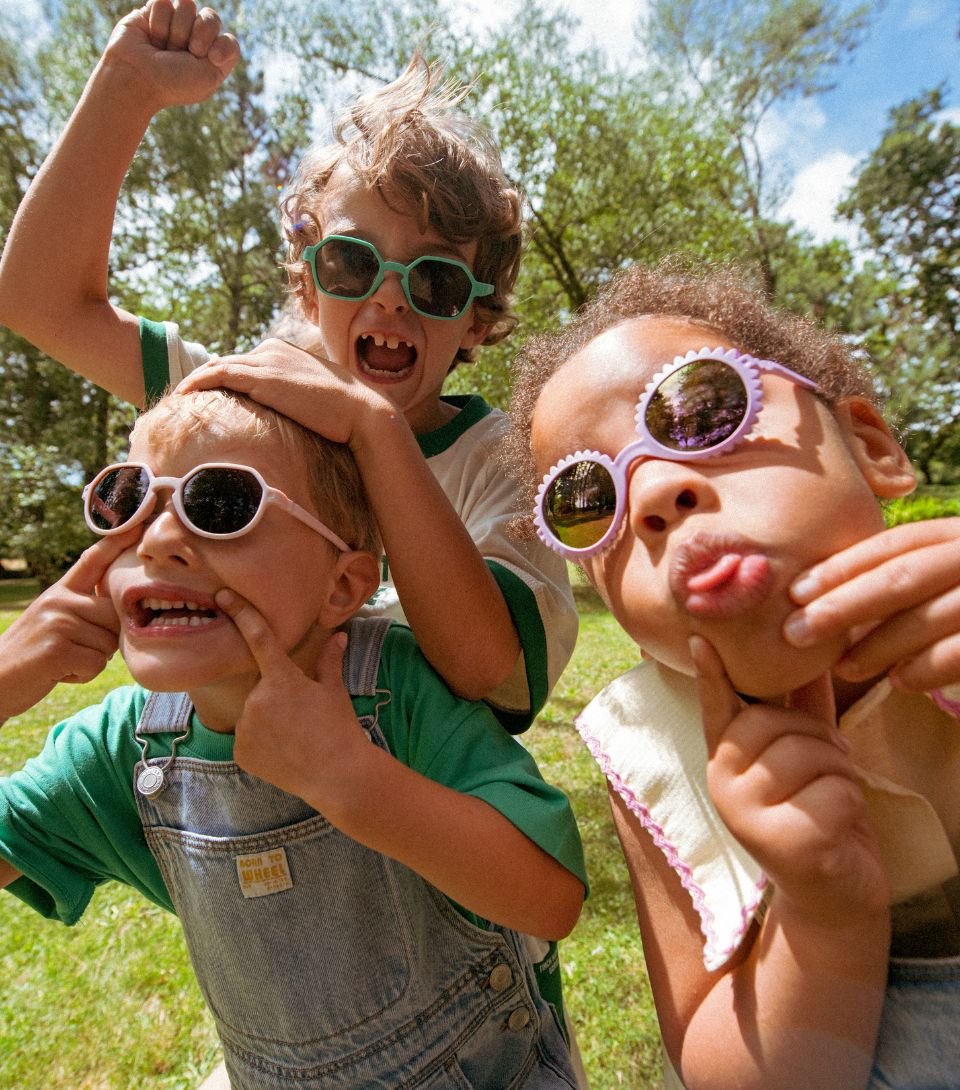
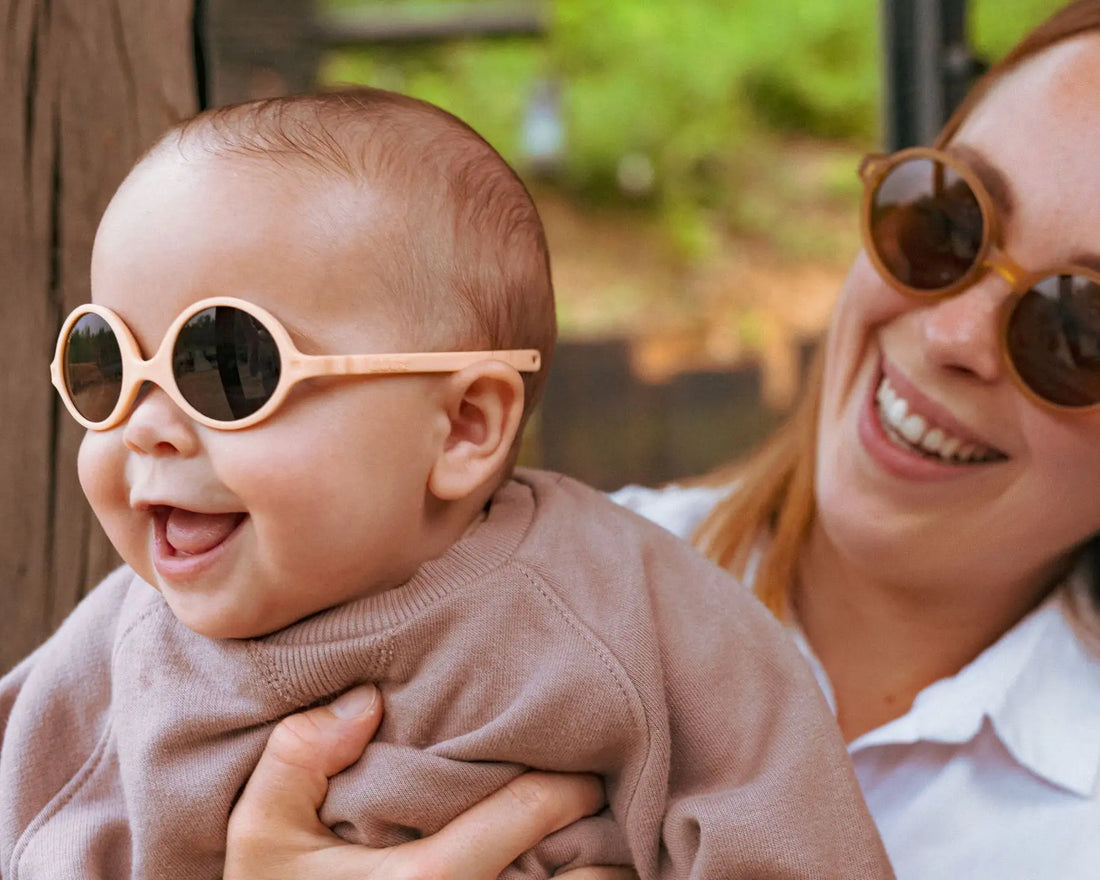
The first factor that can work in your favor is the choice of the pair of glasses. Before the age of one, what helps a baby accept their glasses relies mainly on three essential elements: comfort, colors, and shape. A baby does not yet understand the usefulness of glasses, so you must ensure they are pleasant to wear. Opt for ultra-light, flexible frames that are adapted to the shape of their little face. Bright colors and playful shapes capture their attention and can make wearing glasses more fun.
Finally, consider glasses as a fashion accessory by showing them that Mom, Dad, and their favorite heroes also wear sunglasses.
Do not hesitate to browse our baby sunglasses and our children's sunglasses; we offer a wide range of products for all ages.
Communication and pedagogy
Explaining to a child why they need to wear glasses can be a real challenge. Use simple words and images to illustrate the importance of sun protection. You can also use fun materials like books, cartoons, or games. Showing famous characters or their favorite heroes wearing glasses can also encourage them.
Before the age of one, verbal communication with a baby is more limited, but it is still possible to associate wearing glasses with positive experiences. Observation and imitation play a key role: if your baby sees you wearing sunglasses regularly, they will be more inclined to adopt theirs. You can also integrate the glasses into a daily ritual by putting them on before a stroller ride or associating them with a pleasant moment, such as a walk or outdoor playtime. Finally, presenting the glasses as a familiar object by letting them handle them before wearing them can help reduce their refusal.
Gradual adaptation
Start with short periods and gradually increase the wearing time. It is important not to rush the child and to get them used to their glasses gently. For babies, the ideal is to introduce glasses into their daily routine from the first exposures to the sun so that they become a natural and habitual accessory.
A good strategy consists of having them wear their glasses during enjoyable activities. For example, suggest they put them on only during their favorite moments, such as a stroller ride, a trip to the beach, or outdoor playtime. If the child associates the glasses with a moment of pleasure, they will accept them more easily.
For toddlers, repetition is essential. Start with a few minutes a day, then gradually lengthen the time. The trick is not to insist if they take them off at first, but to persevere with gentleness and patience. Finally, praise them when they keep their glasses on longer than usual; this can reinforce their desire to wear them.
Practical tips
- Clean the lenses regularly so that the child can see well and doesn't feel the urge to take them off.
- For babies, opt for glasses with an adjustable headband to keep them in place without discomfort.
- Distract your child when they are wearing their glasses so they forget their presence. A fun activity or an attractive outing can divert their attention and prevent them from taking them off immediately.
- Also, get into the habit of putting on their glasses as soon as they wake up. By placing them on their nose before they start focusing on objects, their eyes will adjust more naturally and they will not perceive a visual difference that might bother them.

Understanding the refusal: why doesn't my child want to wear glasses?
Exploring possible reasons for the refusal
It is common for a child, especially a baby, to refuse to wear their sunglasses. This rejection can have several causes, and identifying them allows you to adopt the best strategies to remedy it.
-
Physical discomfort: A poorly adjusted frame can be uncomfortable to wear. If it is too tight, it can exert pressure on the bridge of the nose or behind the ears, causing discomfort that will prompt the child to remove them. Conversely, if it is too loose, it risks slipping, which can be annoying for a baby who is barely discovering their environment. It is therefore essential to choose a pair perfectly suited to the child's facial structure and to check its fit regularly.
-
Aesthetic concerns: For slightly older children, what others think can become a determining factor. Some may fear being teased or simply not like their appearance with glasses. In this case, valuing the image of glasses by showing that their favorite characters wear them, or giving them an active role in choosing the frame, can help them overcome this reluctance.
-
Lack of understanding: Before a certain age, children do not perceive the usefulness of glasses. Unlike corrective glasses, whose beneficial effect is immediate, sunglasses do not provide a visible change for the child. The explanation must be adapted to their level of understanding: telling them that their eyes, like their skin, must be protected from the sun can be an effective approach.
-
New and confusing visual sensation: Sunglass lenses modify the perception of light and colors. Some children may be troubled by this new vision and have difficulty getting used to it. To avoid this rejection, it is recommended to accustom the child gradually by having them wear their glasses in a playful manner and in environments where they are truly necessary, such as in direct sunlight.
-
Instinctive opposition: Some babies instinctively pull off anything put on their head or face, whether it be a bonnet, a cap, or glasses. This behavior is normal, but it can be bypassed by introducing the glasses gradually and associating them with pleasant moments.
By understanding why a child refuses to wear their glasses, it becomes easier to adopt the right approach to help them adopt them for the long term.
Adapting explanations to the child's age
Accepting sunglasses depends largely on how they are introduced to the child. For babies (0-1 year), verbal communication is limited, and the child does not yet understand the usefulness of the glasses. The key is to incorporate wearing glasses from the first exposure to the sun, as an automatic gesture, just like putting on a hat or applying sunscreen. It is best to put them on as soon as they wake up when going outside, so their eyes do not experience a sudden change in brightness. Always associate the glasses with a pleasant activity: a walk, a trip to the park, or outdoor playtime. You can also use distraction to divert their attention from the new accessory on their face.
As they grow older, you will be able to explain to them that their eyes, just like their skin, must be protected from the sun to avoid being "damaged" by rays that are too strong.
The importance of discussion with your child
Encourage discussion and answer their questions with patience. The more they understand, the more inclined they will be to accept their glasses. It can be useful to ask them why they don't like wearing their glasses. By listening to their reluctance, you will be able to adapt your approach. For example, if your child finds the temples uncomfortable, try a more flexible frame. If the glasses seem useless to them, show them concrete experiences: test the difference in brightness with and without sunglasses together.
When should I consult a professional?
If your child consistently refuses their glasses or seems to have difficulty seeing correctly, it is important to consult an ophthalmologist. Undetected vision problems may explain their discomfort. An optician can also help you choose a frame better suited to their face and lifestyle.
If your child blinks often, squints in the sun, rubs their eyes frequently, or complains of headaches, these are signs that they might have a vision problem. In this case, a check-up with an ophthalmologist is strongly recommended. Furthermore, an optician can verify that the chosen pair of glasses is well-adjusted and does not cause excessive pressure on the nose or ears.
Why choose Ki ET LA glasses?
At Ki ET LA, we know that convincing a child to wear glasses can be a real challenge. That is why we have designed glasses specifically adapted to the needs of little ones:
-
Optimal comfort: Our ultra-light, one-piece frames are unbreakable and do not squeeze the bridge of the nose or ears.
-
Maximum protection: Our category 3 lenses effectively filter out the sun's harmful rays.
-
Foolproof durability: Designed to withstand handling by young children, our 0-4 year frames are unbreakable (except for the WOAM model).
-
Style that kids love: Playful colors and trendy designs so that your child adopts their glasses with pleasure.
- Focus on our DIABOLA model: Our DIABOLA are specially designed to accompany the growth of toddlers. With their unique reversible system, they offer two sizes in a single frame: one position for babies aged 0-6 months and another for 6-12 months. This frame adapts to the development of your baby's nasal bridge for optimal protection from the very first months of life.
With our glasses, your kids will be able to enjoy the outdoors safely, without compromising on comfort and style!