




Summary:
- At birth: vision is still blurry
- At 1 month: baby begins to track with their eyes
- At 2 months: the first visual exchanges
- At 3 months: colors gradually emerge
- At 4 months: baby discovers depth
- At 6 months: increasingly precise eye-hand coordination
- From 8 to 12 months: baby explores their environment
- From 18 months to 3 years: vision supports autonomy
- From 3 to 6 years: eyesight becomes more refined
- Protecting children's eyes from an early age
From birth, baby's eyes begin to discover the world. Faces, colors, movements, depth... Their vision evolves rapidly over the months and accompanies every major discovery. But how does a newborn actually see? At what age does a child start distinguishing colors? And when does their vision become comparable to that of an adult?
Let’s discover the major milestones of a child's visual development, from their first days up to age 6.
At birth: vision is still blurry
At birth, baby discovers the world with still-immature vision. They mainly perceive contrasts and shapes, but details remain blurry. Their field of vision is limited, and they primarily distinguish what is close to their face, especially when held in their parents' arms.
They are particularly drawn to faces and sharp contrasts. They may also react to bright light, which can be bothersome.
Even if their vision is still limited, their eyes are already hard at work. They begin to capture visual information that will gradually help them recognize their environment.
At 1 month: baby begins to track with their eyes
During the first month, baby makes rapid progress. They begin to fixate on objects better and can slowly follow a face or object moving nearby with their eyes.
They distinguish shapes and contrasts more easily, particularly at a short distance. They especially enjoy eye contact with their parents, which contributes to their first visual discoveries.
However, their vision remains blurry, and their eyes may still lack coordination, especially when they are tired.
At 2 months: the first visual exchanges
Around 2 months, baby gains better control over their eye movements. They follow moving objects more easily and begin to better coordinate both eyes to observe what is in front of them.
This is also when their interest in colors begins to develop. They react more to visual stimuli and enjoy observing faces.
The famous social smile often appears at this age: baby responds to the smiles and expressions of those close to them. Visual exchanges thus become true moments of bonding.
At 3 months: colors gradually emerge
Around 3 months, baby's color perception improves. They begin to better distinguish different hues and show a growing interest in colorful objects.
They follow movements more easily and observe their surroundings more closely. Their vision is still developing, but they perceive details that catch their attention more and more clearly.
It is a period rich in discoveries: colorful toys, faces, and moving objects become sources of curiosity.
At 4 months: baby discovers depth
Around 4 months, depth perception gradually develops. Baby begins to better perceive distances and coordinate both eyes to observe their environment.
This progress accompanies the development of their eye-hand coordination. They reach out to grab objects, try to grasp them, and start adjusting their movements based on what they see.
Their vision becomes a true tool for exploration: they observe, touch, and manipulate an increasing number of objects.
At 6 months: increasingly precise eye-hand coordination
At 6 months, baby has already made significant visual progress. They better distinguish shapes, colors, and depth. They can follow a moving object and adjust their movements to grab it.
Their eye-hand coordination is becoming more refined. They start to manipulate objects with greater precision and become more interested in their surroundings.
At this age, their vision is still far from fully mature, but it already allows them to make numerous discoveries and develop their autonomy.
From 8 to 12 months: baby explores their environment
From 8 months on, baby gradually gains mobility. As they begin to sit up, crawl, or move on all fours, their field of exploration expands considerably.
They learn to better estimate distances, spot objects of interest, and shift their attention from one item to another.
Around 12 months, their motor and visual progress allows them to move toward the objects they wish to reach. They recognize many familiar items and observe their environment with growing curiosity.
Nevertheless, their vision continues to develop, particularly regarding precision and visual acuity.
From 18 months to 3 years: vision supports autonomy
With the acquisition of walking, the child explores new spaces and multiplies their experiences. They learn to coordinate their movements with what they see: navigating around an obstacle, grabbing a toy, or climbing a few stairs.
Around age 2, they generally begin to recognize themselves in a mirror. Their visual perception also allows them to carry out increasingly precise activities, such as stacking blocks, drawing, or nesting shapes.
As months go by, their eye-hand coordination progresses, and their visual abilities support their motor and cognitive development.
From 3 to 6 years: eyesight becomes more refined
Between 3 and 6 years old, a child's visual abilities continue to develop. They perceive details better, refine their depth perception, and improve their eye-hand coordination.
This progress allows them to engage in increasingly complex activities: drawing, cutting, building, recognizing shapes, or even beginning to read.
Around age 5 or 6, many children's visual acuity nears that of an adult. However, visual maturation can continue beyond this age.
This period is particularly important for learning. A visual difficulty can sometimes go unnoticed and hinder certain daily activities. This is why eye care and age-appropriate screenings are essential.
Protecting children's eyes from an early age
Throughout their development, a child's vision deserves special attention. Among the good habits to adopt from the earliest age, protection against ultraviolet (UV) rays holds an important place.
UV rays can be harmful to the eyes, even when the sun seems faint. Outdoors, it is therefore recommended to adopt a few simple habits:
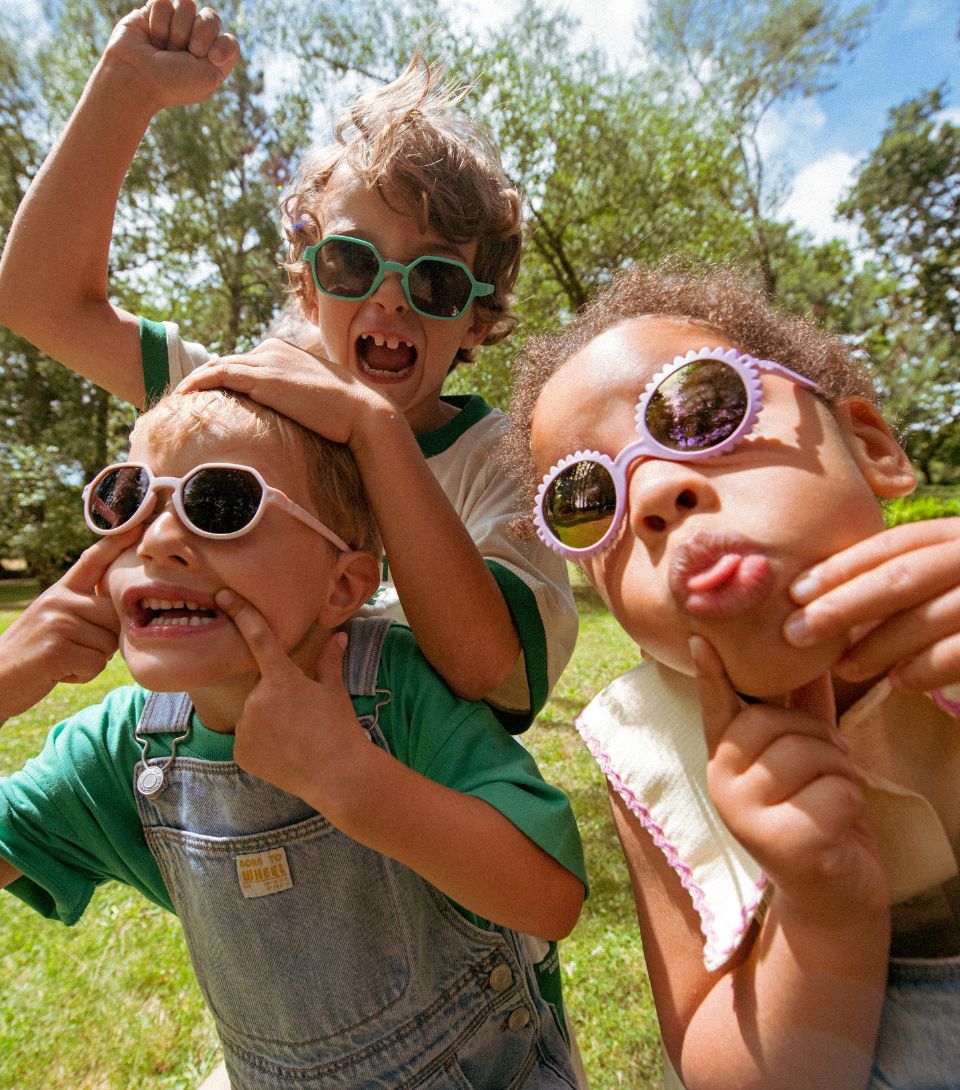
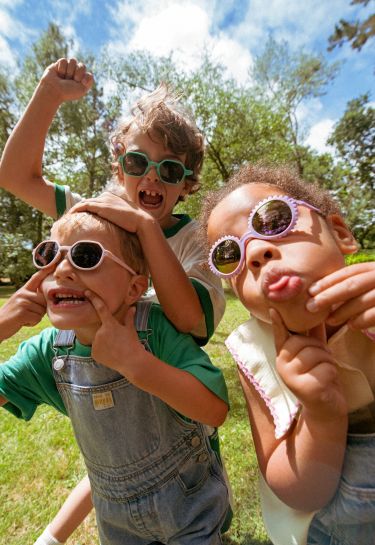
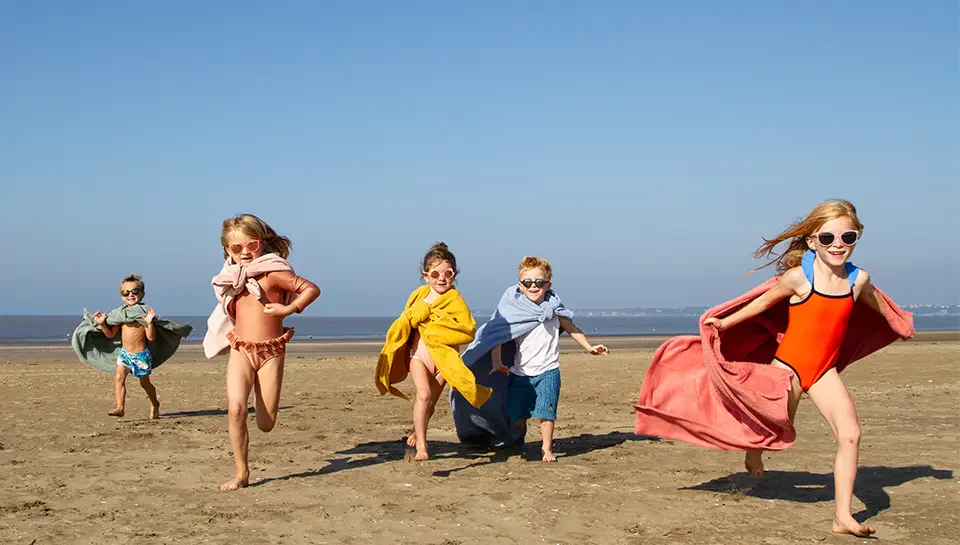
- Wear suitable sunglasses: choose children's sunglasses that filter 100% of UVA and UVB rays, with a protection category suited to the brightness.
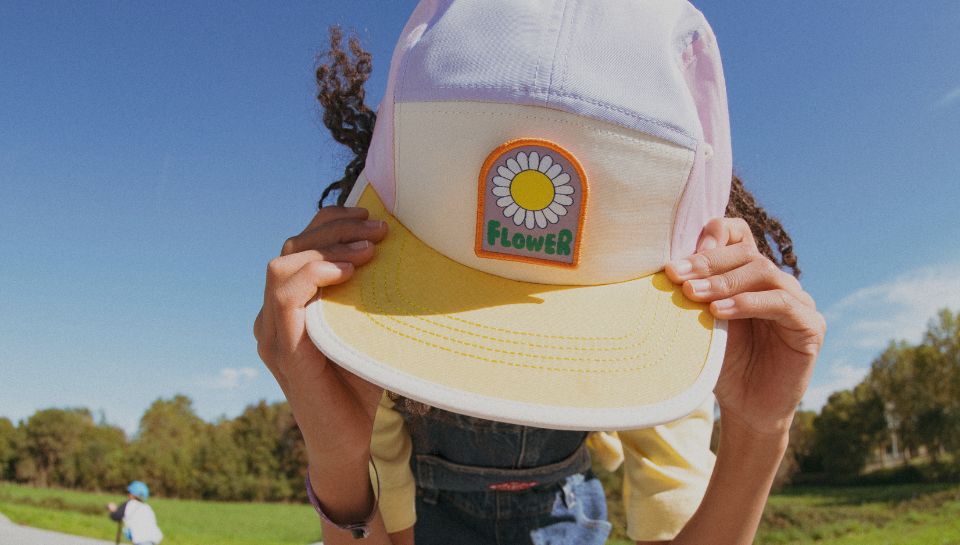
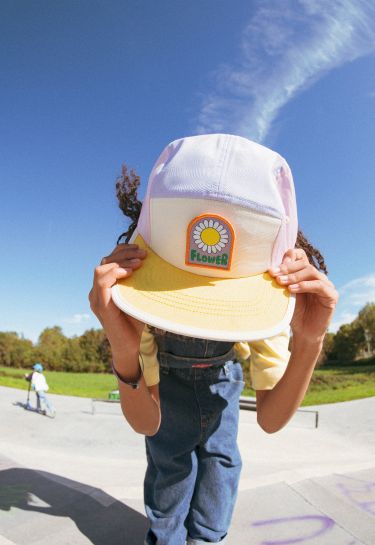
- Opt for wide-brimmed hats: they help limit direct exposure of the eyes to the sun.
- Seek shade: especially when the sun's rays are most intense.
- Adapt protection to activities: at the beach, in the mountains, or during walks, needs can vary depending on exposure.
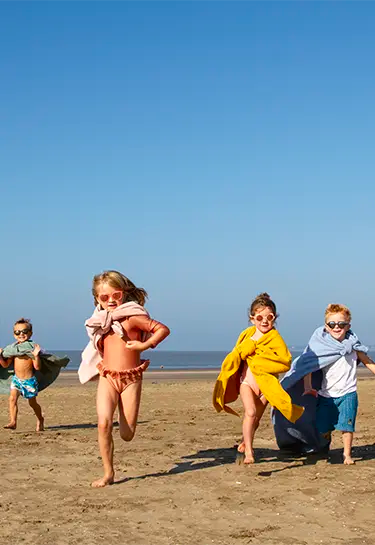
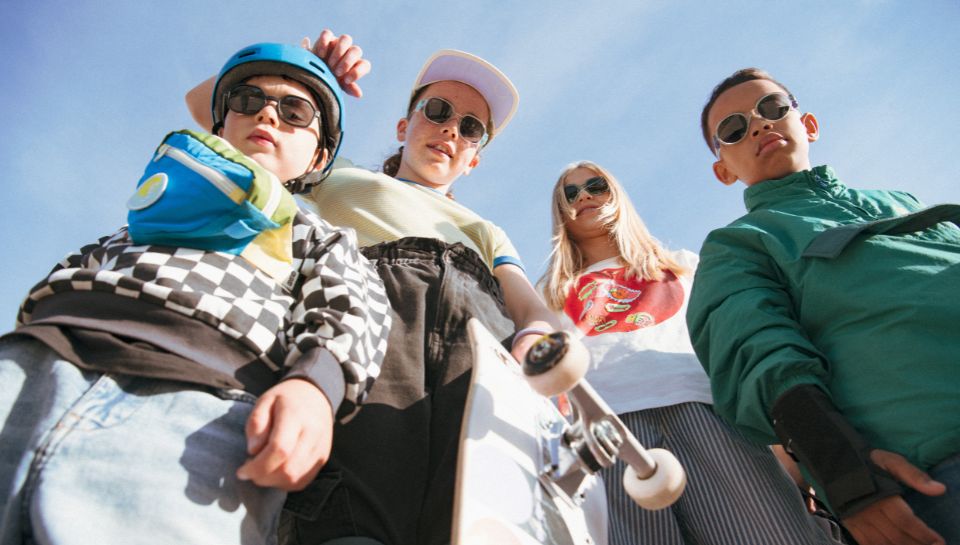
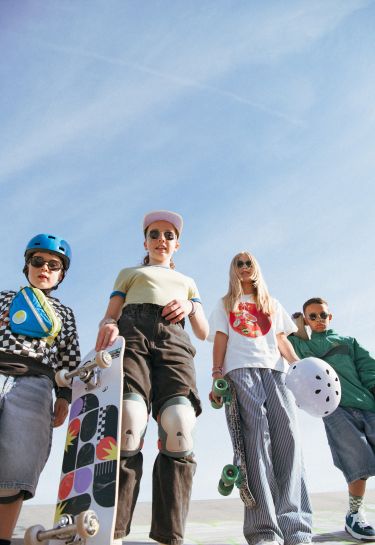
At Ki ET LA, we pay special attention to children's sun protection, with sunglasses and hats designed to accompany their adventures.
From their first glances to their big discoveries, every step counts in preserving your child's visual health.