








SUMMARY:
Exposure to the sun has many benefits, notably by stimulating the production of vitamin D, which is essential for bone health. However, from birth, babies' skin and eyes are extremely sensitive to UV rays. Prolonged exposure, even in low doses, can cause skin and eye damage that accumulates over time. Contrary to popular belief, the effects of the sun do not only manifest in adulthood: childhood sunburn increases the risk of skin cancer later in life, and unprotected eyes also suffer irreversible damage. It is therefore essential to understand the dangers of the sun from a very young age and to take appropriate preventive measures.
Understanding the effects of the sun and UV rays
The UV index is used to measure the intensity of solar radiation. The higher it is, the more crucial it is to protect yourself, even in cloudy weather or fog. The UV index is classified as follows:
- Low: less than 2
- Moderate: between 3 and 4
- High: between 5 and 6
- Very high: between 7 and 8
- Extreme: above 9
During the summer months, the UV index often exceeds 7 or 8 and can reach 10 at high altitudes, where the intensity of solar rays is heightened. Reflection off surfaces such as sand, water, or snow further accentuates the impact of UV rays. The impact of UV rays varies according to their intensity and the duration of exposure.

Danger to the skin
The sun emits different types of UV rays: UVA and UVB, which are responsible for skin damage. Repeated exposure to the sun leads to deep alterations of the skin, even without visible sunburn. UVA rays penetrate down to the dermis and gradually destroy the cells responsible for collagen production, which promotes the early appearance of wrinkles and dark spots. UVB rays cause sunburn and mutations in the DNA of skin cells, increasing the risk of skin cancer, particularly melanoma.
Danger to the eyes
UV rays also affect ocular membranes, and their impact is cumulative. Overexposure can cause damage to the internal structures of the eye and promote the development of early cataracts. UVB rays are particularly aggressive to the cornea and can cause a painful inflammation called photokeratitis (snow blindness), similar to a sunburn.
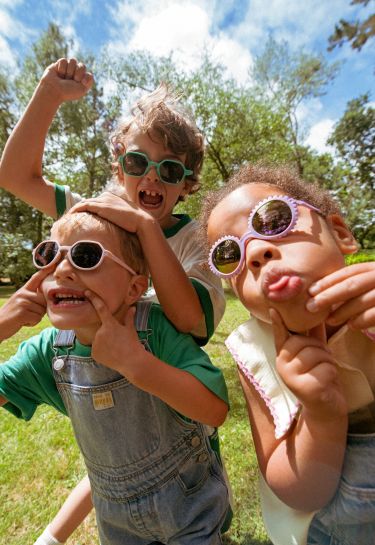
To effectively protect your kids from the effects of the sun, we offer a wide selection of baby sunglasses. Furthermore, we also offer a range of sunglasses for children, to protect them at any age!
Children have more fragile skin
Heatstroke in children
Young children are more vulnerable to heatstroke because their thermoregulation system is immature. Prolonged exposure without protection can lead to rapid dehydration, heat exhaustion, and fainting. Symptoms include redness, headaches, extreme fatigue, and a baby's crying.
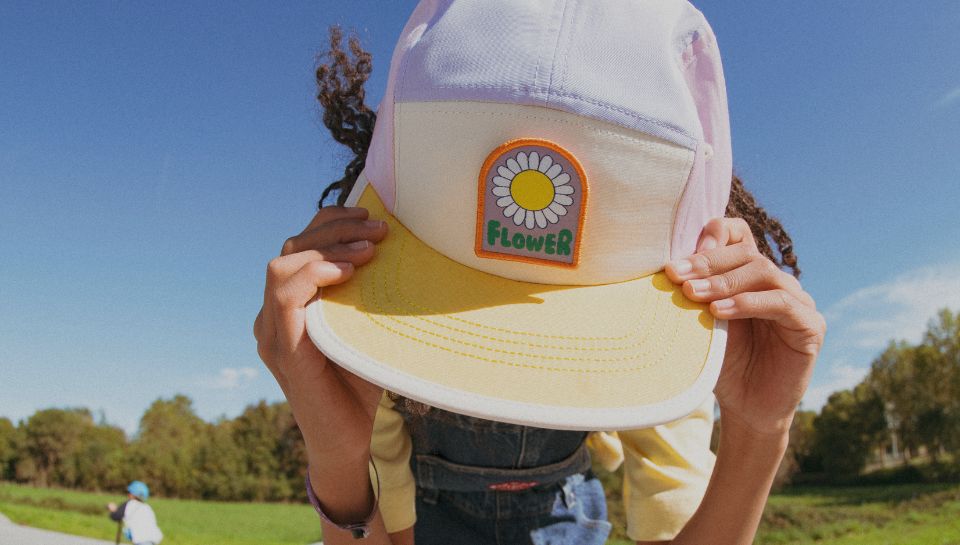
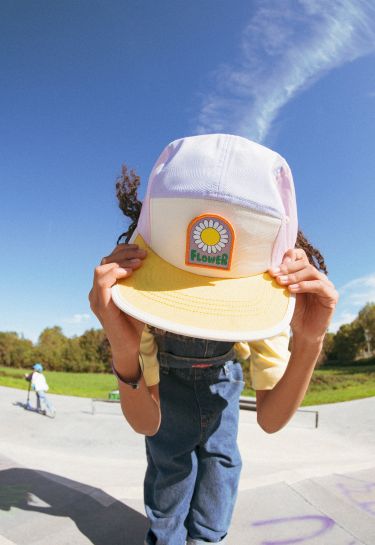
Anti-UV hats are essential to protect the head, face, and neck of little ones and reduce the risks of heatstroke by limiting direct exposure to rays. Their fabric blocks a large portion of UV rays, ensuring an effective barrier, even in intense sunlight.
Sunburn in little ones
Infants' skin is thinner and less pigmented, which makes it particularly vulnerable to UV rays, especially UVB rays, which are responsible for sunburn. These burns result from an inflammatory reaction that leads to skin redness due to the dilation of blood vessels. They generally appear between 8 and 24 hours after exposure.
On baby skin, a sunburn manifests as intense redness, dry skin, and sometimes painful blisters. After a few days, the skin often starts to peel. A single burn during childhood can permanently alter skin cells, leading to spots and significantly increasing the chances of developing skin cancer in adulthood.
To limit the damage and promote healing, it is essential to properly hydrate the skin after excessive exposure and avoid any further sun aggression.
The danger to your child's eyes
UVA rays
They are the most dangerous because they penetrate deep into the eye and contribute to the premature aging of ocular tissues. They are associated with retinal changes and can promote the onset of diseases such as age-related macular degeneration (AMD).
UVB rays
They are responsible for ocular sunburn and directly affect the cornea. They can cause painful lesions and be at the root of early cataracts.
Eye diseases and ocular sunburn
A child exposed without sun protection can develop repeated conjunctivitis, chronic dry eyes, or more serious damage such as a pinguecula (yellowish deposit on the conjunctiva) or ocular melanoma.
Choosing sunglasses suited to the UV index and your child's age
Sunglasses categories
Sunglasses are classified by categories based on their filtering power:
-
Category 0: Aesthetic accessories, no UV protection.
-
Category 1: Light protection, for cloudy weather.
-
Category 2: Moderate filtration, for medium brightness.
-
Category 3: High UV protection, recommended for outdoors.
-
Category 4: Maximum protection, for high exposure (high mountains, on a boat at sea).
For optimal protection, choose category 3 or 4 lenses. In addition, it is important to pay attention to the CE marking, which requires UV 400 lenses that filter 100% of UV rays.

Sunglasses for babies (0 to 1 year old)
Before 1 year of age, babies' eyes are extremely fragile and do not correctly filter UV rays. Prolonged exposure can lead to irreversible eye damage. Suited sunglasses are therefore essential from the very first exposures.
Of course, it is imperative to choose at least category 3 sunglasses. Furthermore, we recommend opting for a pair with a strap to ensure the glasses stay securely in place. Finally, it is also preferable to choose an ultra-light and flexible frame to ensure optimal comfort, as little ones often find it difficult to tolerate accessories on their face. With these criteria, your baby will be able to discover the world in complete safety under the sun.
Sunglasses for children (1 to 4 years old)
At this age, children become more active and explore their environment with curiosity. Their exposure to the sun is often more prolonged, especially during outdoor outings and playtime. It is therefore essential to choose suitable glasses that combine protection, comfort, and resistance.
Comfort is a key criterion: flexible temples and an ergonomic design will allow for an optimal fit, without pressure on the ears or nose. Opt for lightweight and unbreakable frames, designed from flexible materials to avoid any risk of injury in case of falls. Polycarbonate lenses are recommended for their strength and their ability to filter 100% of UV rays.
Finally, the choice of design and color plays an important role: the more a child likes their glasses, the more inclined they will be to wear them regularly. Fun and colorful models will facilitate acceptance and integration of the glasses into their daily life. Choose lightweight, unbreakable, and well-covering frames to protect eyes from indirect glare.
Sunglasses for juniors (4 to 9 years old)
From the age of 4, children start to have varied outdoor activities, ranging from open-air games to sports. At this age, eyes remain very vulnerable to UV rays.
The glasses must be designed for intensive use and adapt to the needs of dynamic children. Opt for frames made of flexible, shock-resistant materials capable of following their movements and adventures without risk of breakage. Polycarbonate lenses, in addition to being ultra-resistant, guarantee total filtration of UV rays.
Ergonomics is also a key criterion: a good fit is necessary to ensure optimal stability, without slipping or exerting excessive pressure on the face.
Finally, to ensure stress-free acceptance, favor trendy models that appeal to children. The more they appreciate their glasses, the more they will wear them with pleasure and regularity. As children begin to have more varied activities, the glasses must be adapted to their lifestyle.
Sunglasses for teens
Adolescence is a period where aesthetics play a significant role in the choice of accessories, including sunglasses. However, the need for sun protection remains just as essential, as UV rays continue to affect eye health.
For teens, the challenge is finding a compromise between style and safety. It is recommended to opt for glasses with a modern and attractive design, while ensuring they offer optimal UV filtration. Category 3 lenses are ideal for daily use, while category 4 is preferable for activities in high mountains or by the seaside.
Comfort remains paramount: lightweight frames with well-adjusted temples guarantee long-term wear without discomfort.
Finally, it is essential to educate adolescents on the dangers of poor-quality sunglasses, especially those sold without UV certification. Encouraging the purchase of appropriate, certified sunglasses allows them to protect their vision while staying stylish. Teens need frames with a trendier design while maintaining optimal protection against UV rays.
Why choose Ki ET LA sunglasses?
At Ki ET LA, we offer glasses specially adapted to their needs:
-
Category 3 UV400 lenses: Maximum protection against UV rays.
-
Ultra-light and flexible frames: Optimal comfort so the child accepts them easily, without pressure on the bridge of the nose and the ears.
-
Unbreakable frames for 0 to 4 years old: Resistant to the handling of the youngest ones.
-
Trendy designs: So that every child finds a model they love.
With our sunglasses, your kids can enjoy the sun in complete safety, without compromising on comfort and style!
Sources:
- L'Assurance Maladie. Protecting yourself from the sun. Website: Ameli (France); 2025 [accessed March 25, 2025]
- Ophtalmologie Express. The effect of the sun on your eyes. Website: Ophtalmologie Expres (France); 2022 [accessed March 25, 2025]
-
Fondation pour la Recherche Médicale. Ophthalmology: why is the sun harmful to the eyes?. Website: FRM (France); 2024 [accessed March 25, 2025]