









Table of Contents:
- Certification or material: what's the difference?
- 1. Our certifications: better understanding the labels
- 2. Our materials: what's behind the acronyms?
- 3. How to choose a child's garment by taking its composition into account?
- 4. What to remember about Ki ET LA certifications and materials
When buying a garment or accessory for your child, you often look at several things: is it comfortable? Will it withstand play, outings, and washing? Is it suitable for their age? And, more and more, another question arises: what is it made of, and what do the labels on its tag mean?
GRS, OEKO-TEX®, RPET, recycled polyester... These terms appear on product sheets and labels, but they are not always easy to understand. Some refer to certifications, others to materials or manufacturing processes. They therefore do not all guarantee the same thing.
At Ki ET LA, we use different materials to design products suited to children's daily lives, with particular attention paid to their comfort, durability, and the traceability of certain components. Here is a simple glossary to help you understand these terms and know what they actually offer.
Certification or material: what's the difference?
Before decoding the acronyms, let's start with a useful distinction.
A material refers to what makes up a product: polyester, cotton, TPEE, or spandex. It has particular properties, such as flexibility, lightness, durability, or quick-drying ability.
A certification, on the other hand, is based on a defined set of standards and controls. It allows certain criteria to be verified regarding a product, its composition, or its manufacturing. Depending on the label, these criteria may relate to the presence of recycled materials, the traceability of the production chain, or the presence of chemicals in textiles.
In other words, a recycled material is not automatically GRS certified, and an OEKO-TEX® certified textile is not necessarily made from recycled fibers. Each mention answers a different question.
1. Our certifications: better understanding the labels
GRS: what does Global Recycled Standard mean?
GRS stands for Global Recycled Standard. This certification guarantees that the recycled materials used in a product are indeed derived from recovered materials, and not from new materials manufactured specifically to later be presented as recycled.
In practical terms, this means that resources that have already been used, such as plastic, can be recovered, processed, and then reused to make new textiles or accessories. They thus get a second life!
The GRS certification makes it possible to verify the origin and journey of these materials throughout their processing. It also takes into account certain environmental and social criteria related to manufacturing.
Who issues the GRS certification?
The standards are developed by Textile Exchange. Independent certification bodies audit companies and the various manufacturing stages to verify compliance with the requirements.
What is it actually used for?
The GRS certification provides greater transparency regarding the origin of the recycled materials used in products. It makes it easier to understand what lies behind the term "recycled material" and ensures that it is subject to controls.
At Ki ET LA, we have chosen to incorporate recycled materials into some of our collections. This approach gives a second life to existing resources while designing products suited to children's daily lives.
| Key takeaway: GRS is a certification that regulates the use of recycled materials and makes it possible to verify their traceability, from recovery to the finished product. |
OEKO-TEX®: what does this certification guarantee?
The name OEKO-TEX® often appears on textiles and clothing. But what exactly does it mean?
The OEKO-TEX® STANDARD 100 certification guarantees that the components of a textile item have been tested to ensure they do not contain harmful substances at concentrations exceeding the limits set by the standards.
Testing may cover the fabric, threads, accessories, and various elements that make up the product. The requirements take into account the intended uses and contact with the skin. Products intended for babies and young children are subject to particularly strict criteria.
Who issues this certification?
Testing is carried out by independent testing institutes belonging to the OEKO-TEX® network. The certification is awarded after verifying compliance with the requirements of the standards.
Why is this important for parents?
Children wear their clothes for long hours. They move, sweat, play, and may have sensitive skin. Knowing that a textile has been tested for certain harmful substances provides an additional benchmark when choosing a product.
For Ki ET LA, this certification is part of our commitment to the textiles used in our collections.
| Key takeaway: OEKO-TEX® STANDARD 100 covers the testing of harmful substances in textile components. It does not certify that a product is recycled or manufactured in a completely eco-friendly way. |
2. Our materials: what's behind the acronyms?
Now that certifications are easier to distinguish, let's move on to materials. Some are used to make eyeglass frames, while others are used to make hats, fanny packs, or swimsuits.
What do they have in common? They are chosen to meet practical needs: to accommodate children's movements, withstand their adventures, and provide them with everyday comfort.
TPEE: a flexible and durable material for glasses
TPEE stands for Thermoplastic Polyester Elastomer. Behind this somewhat technical name is a material that combines flexibility and durability.
It can deform under stress and then return to its original shape under the conditions intended for its use. This property is particularly useful for children's accessories, which are often handled, set down, carried, and sometimes a little rough with!
What are its advantages?
- Good flexibility, which is appreciated in frames designed for children.
- Durability suited to everyday handling and twisting.
- A lightweight material that promotes comfort when worn.
- A recyclable material, depending on the appropriate processing channels and conditions.
Which Ki ET LA products use TPEE?
This material is used in our FUN and ICONIK ranges of unbreakable glasses.
It helps create flexible and durable glasses designed to keep up with little ones. A real asset when glasses pass from the child's hands to their parents', from the bag to the stroller, and then back to playing!
RPC and RTR90: recycled materials for certain frames
RPC and RTR90 refer to materials used in the manufacturing of certain eyeglass frames. In our collections, they are part of an approach aimed at incorporating recycled and recyclable materials.
Using recycled materials makes it possible to give a new life to existing resources and reduce the use of virgin materials. However, their benefits must be considered alongside their technical characteristics: a frame must remain comfortable, lightweight, and durable enough to accompany children.
What are their advantages?
- The incorporation of recycled materials into the manufacturing of frames.
- An approach that helps reduce the use of virgin resources.
- Materials suited to the design of glasses for children.
Which Ki ET LA products use these materials?
They are found in our VIBE glasses, which are notably recognizable by their 180° temples. Their design is intended to accommodate everyday movements and handling.
RPET: recycled plastic turned into textile
RPET stands for Recycled Polyethylene Terephthalate. It is polyester made from recycled PET, a material found notably in certain plastic bottles.
The principle? Collect already used plastic, process it to obtain raw material, and then manufacture new textile fibers. These can then be used to make various products, such as hats or bags.
What are the advantages of RPET?
- It makes it possible to reuse existing plastic material.
- It helps reduce the use of polyester derived from virgin resources.
- It makes it possible to manufacture lightweight and durable textiles suited for everyday accessories.
Which Ki ET LA products use RPET?
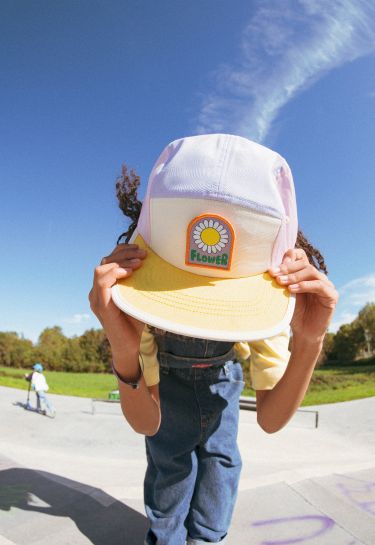
We use recycled polyester in some of our hats and fanny packs.
It is an interesting material for these accessories that children take everywhere: to school, on walks, on vacation, or on family outings. It makes it possible to combine the expected properties of a textile with the incorporation of recycled materials.
Note: RPET remains a material derived from plastic. The fact that it is recycled does not mean that it is biodegradable, nor that it can be recycled indefinitely.
Recycled polyester and spandex: the comfortable duo for swimsuits
For swimsuits and one-piece swimsuits, the choice of fabric is essential. Children run on the beach, swim, play in the water, and take diving after diving. Their clothing must therefore give them great freedom of movement.
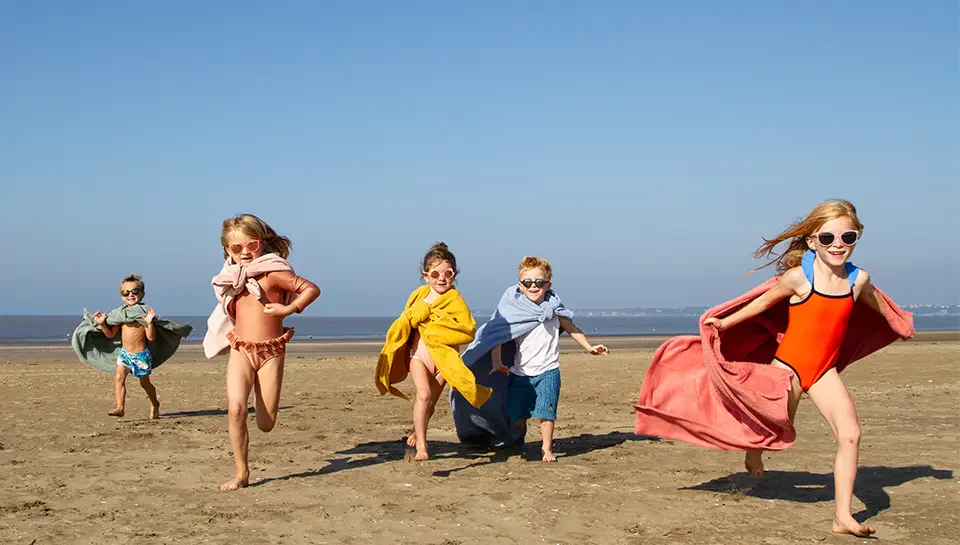
At Ki ET LA, some of our swimsuits and one-piece swimsuits combine recycled polyester and spandex.
Recycled polyester is made from recycled plastic materials. It notably provides lightness and helps the textile dry. Spandex, also known as elastane, is a stretchy fiber that gives the fabric its flexibility.
Why combine these two fibers?
- Recycled polyester makes it possible to incorporate recycled materials into the textile.
- Spandex provides elasticity and helps the garment accommodate movement.
- Their combination creates a comfortable, flexible fabric suited to aquatic activities.
- The textile is designed to dry quickly after swimming.
Which Ki ET LA products are concerned?
This combination of materials is used for our swimsuits and one-piece swimsuits.
It meets the needs of children who like to spend long hours in the water, build sandcastles, or run around the edge of the pool. Comfort remains essential so they can fully enjoy their activities.
3. How to choose a child's garment by taking its composition into account?
Faced with all these terms, it is easy to feel a little lost. Should you favor a garment made from recycled polyester? Look for an OEKO-TEX® certification? Choose a product bearing the GRS label?
The right approach is to look at what each piece of information tells you, and then put it into perspective with the product's use.
For textiles worn directly on the skin
For a swimsuit, t-shirt, or garment worn for several hours, the composition and any certifications related to chemicals can be interesting criteria. OEKO-TEX® STANDARD 100, for example, provides information about the tests carried out regarding harmful substances.
Also think about comfort: a pleasant fabric, a suitable fit, and well-placed seams matter a lot in a child's daily life.
To choose a product incorporating recycled materials
If you want to favor recycled materials, look at the product's composition and the information available about their origin. An RPET mention indicates that the polyester comes from recycled PET. A GRS certification provides an additional framework for verification and traceability.
Keep in mind that the presence of recycled materials is not enough, on its own, to assess the overall environmental impact of a product. The duration of use, care, and end-of-life also matter.
For everyday accessories
For glasses, a hat, or a fanny pack, the technical properties of the material are just as important. A flexible and durable frame, a lightweight hat, or an easy-to-carry bag must be suited to children's use.
The goal is to choose an accessory that suits them, that they will enjoy using, and that can accompany them in their activities.
4. What to remember about Ki ET LA certifications and materials
To help you remember the essentials, here is a quick summary:
|
Mention |
What is it about? |
Where can it be found at Ki ET LA? |
|
GRS |
Certification regulating recycled materials, their traceability, and certain production requirements |
On hats, swimsuits, ponchos, and fanny packs |
|
OEKO-TEX® STANDARD 100 |
Certification covering the testing of harmful substances in textile components |
On swimsuits |
|
TPEE |
Flexible and durable material |
FUN and ICONIK unbreakable glasses |
|
RPC and RTR90 |
Recycled and recyclable materials used for certain frames |
VIBE glasses with 180° temples |
|
RPET |
Polyester derived from recycled PET |
On hats and fanny packs |
|
Recycled polyester and spandex |
Combination of fibers to obtain a flexible and comfortable textile |
Swimsuits and one-piece swimsuits (non-textured) |
Certifications and materials provide complementary information about products. The former make it easier to understand certain controls and commitments; the latter explain the properties of the fabric or material used.
At Ki ET LA, we attach importance to the choice of materials and the design of products suited to children's lives. Because between games, outings, vacations, and the great adventures of everyday life, their accessories must be able to keep up!
The next time you read GRS, OEKO-TEX®, or RPET on a product sheet, you will therefore know a little better what lies behind these few letters.