




Table of Contents
- How does a child's vision develop?
- Light-colored eyes
- Blue light, the danger of screens
- The dangers of the sun for children's eyes
- How to protect your children's eyes from the sun
How does a child's vision develop?
- At birth: Newborns mainly distinguish contrasts and shapes and do not yet perceive all colors. Their vision is still blurry and they react strongly to intense light.
- Between 2 and 3 months: The child begins to follow objects with their eyes. The eyes can tire quickly, and bright flashes of light may bother them.
- Between 3 and 9 months: Color perception improves and the child explores their visual environment, but remains sensitive to direct light.
- At 1 year: The child perceives depth and distances better. Glasses or a hat can help protect their eyes from the sun.
- At 4 years: Vision approaches that of adults, but the eyes can still get tired in the sun or in front of screens.
- At 7 years: Visual coordination is more precise. This is a good time to monitor vision and prevent fatigue or myopia.
- At 10 years: Vision is stable, but precautions against UV rays and intense light remain important.
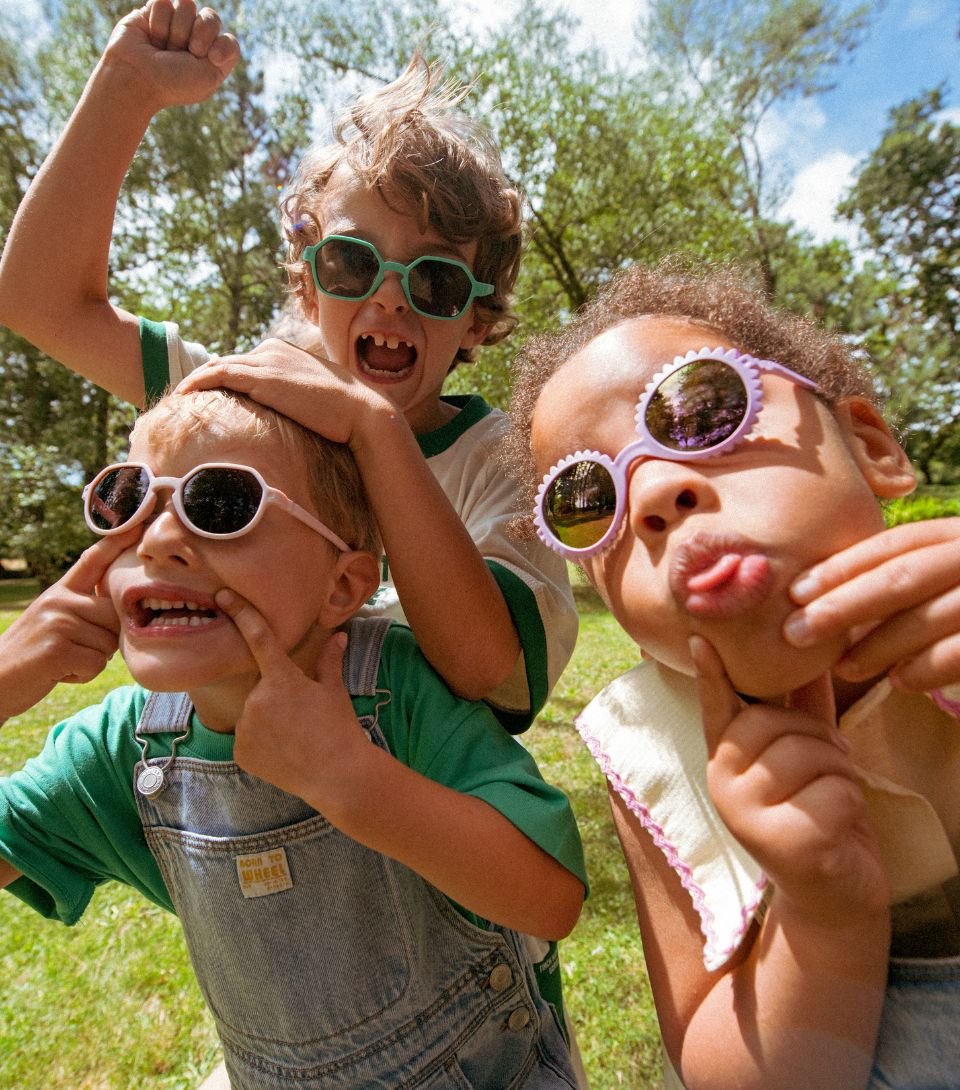
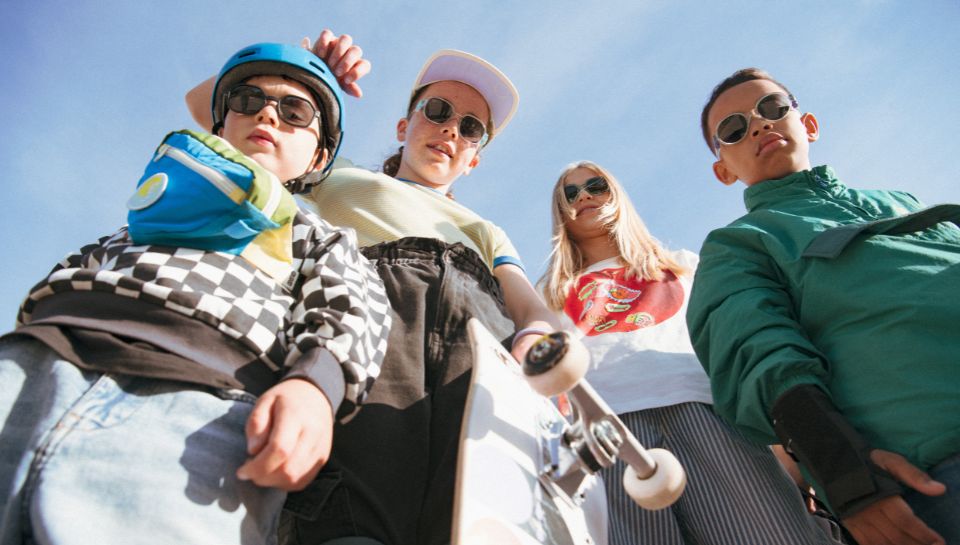
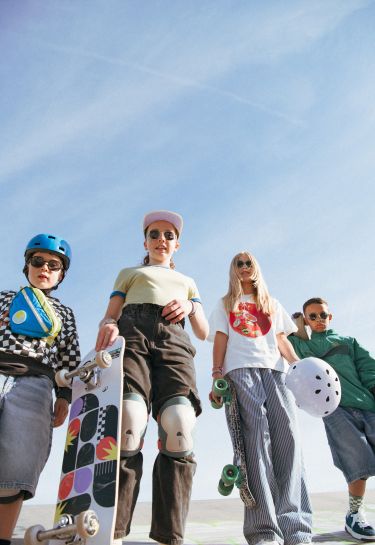
Hence the importance of choosing sunglasses adapted to their age. At Ki ET LA, we offer baby sunglasses, sunglasses for kids, and also for older children.
Light-colored eyes
Children with light-colored eyes are more sensitive to light and reflections. They may feel discomfort more quickly, and a hat or sunglasses can help protect their vision.
Blue light, the danger of screens
The dangers of the sun for children's eyes
- UV rays: UV rays can reach kids' eyes more easily and cause irritation or visual fatigue.
- The lens is less dense and the iris does not filter as much light. In a child, the lens and iris do not completely block light, which makes vision more sensitive to the sun.
- Ocular sunburn: prolonged exposure can cause superficial burns and temporary discomfort.
- Long-term risks: Repeated exposure without protection can promote vision problems or eye fatigue in the long term.
How to protect your children's eyes from the sun
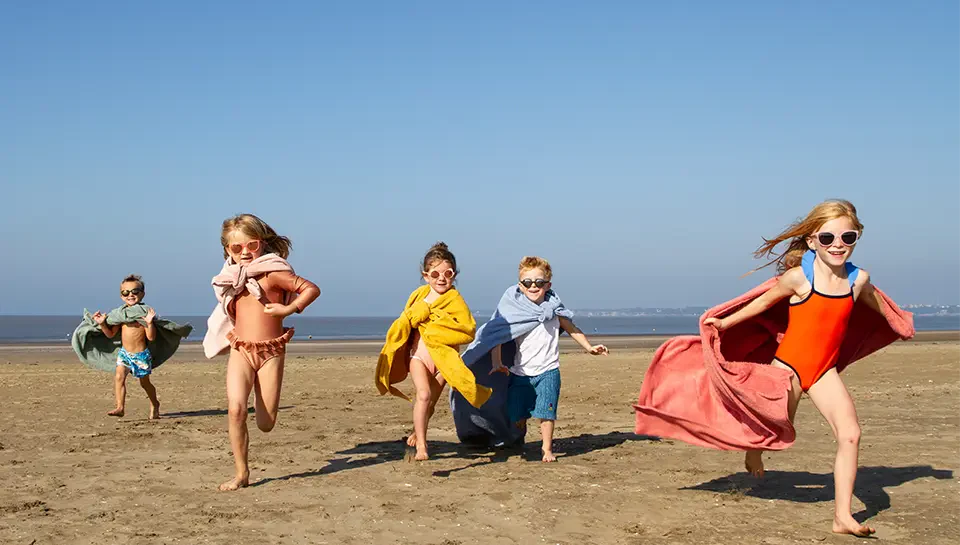
Wear adapted sunglasses
Opt for glasses offering UV 400 protection, which effectively blocks UVA and UVB rays. Check that they fit your child's face well, so that light does not get in from the sides and they remain comfortable. Finally, encourage your child to wear them regularly, in order to protect their eyes daily and make it a natural habit.
Wear a wide-brimmed anti-UV hat
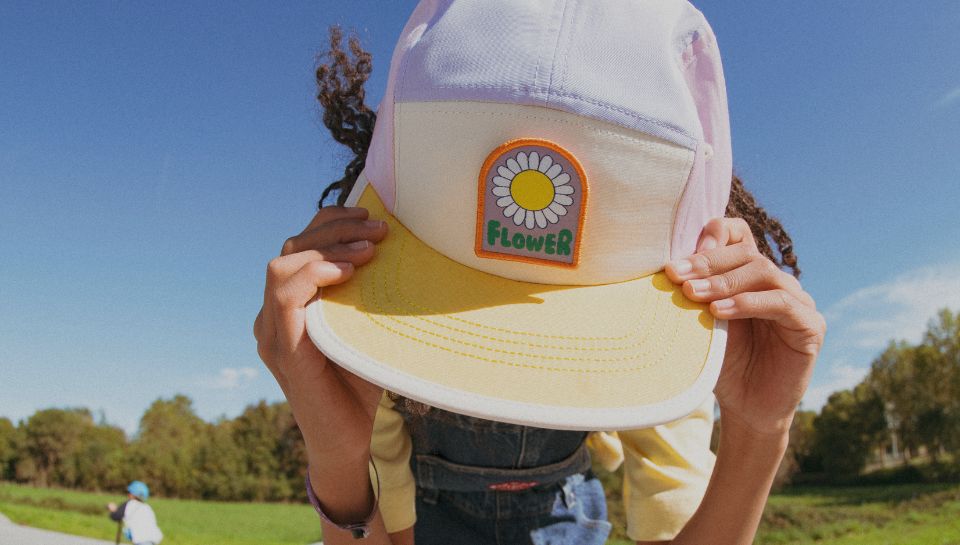
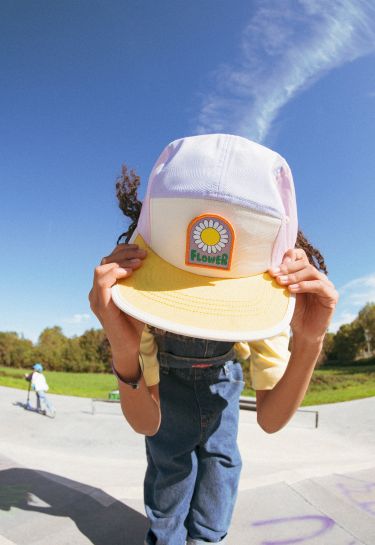
A wide-brimmed hat complements the glasses. It protects the face, ears, and eyes from direct sun, reducing glare and discomfort, especially for younger children whose eyes are very sensitive.
Limit sun exposure
To protect your kid's eyes and skin, prefer less dangerous hours of exposure, such as the morning or late afternoon. Avoid the sunniest hours of the day, generally between 11 a.m. and 4 p.m., when UV rays are most intense. Also have them wear a wide-brimmed hat to protect the face and eyes. Finally, apply sunscreen to your child's face and ears to complete the protection.
Consult an ophthalmologist regularly
Having regular exams allows you to detect any vision or eye health problems as soon as they appear. The specialist can also recommend adapted glasses or lenses if necessary, to ensure the proper visual development of your child.