







Summary:
- Key takeaways:
- What are polarized lenses?
- UV protection and visual comfort: don't confuse the two
- At what age should you choose polarized lenses?
- In what situations are polarized lenses useful?
- How do you choose the right sunglasses for children?
- What about screens in all this?
- FAQ
When the sun is shining, children's eyes need real protection. Between frames, lens categories, light management, and glare, the choices can quickly become complex for parents. Among the options available, polarized lenses often raise questions. Do they provide a real benefit for a child? And in what cases are they truly useful? Here is everything you need to know to make the right choice.
Key takeaways:
- Polarized lenses reduce glare and improve visual comfort
- They do not replace 100% UV protection
- They are not recommended for children under 4
- They become relevant around 5-6 years old, especially in bright sun or for sports
- At Ki ET LA, polarized lenses are offered for children aged 4 to 12
What are polarized lenses?
Polarized lenses incorporate a specific filter that blocks a portion of horizontally reflected light. Simply put: they limit annoying glare on water, sand, roads, or snow. The result: vision is clearer, contrasts are better perceived, and eyes are less dazzled.
For an active child who plays outside or practices sports, polarized lenses provide genuine visual comfort.
Good to know:
Polarized lenses improve comfort, but the priority remains choosing effective protection against UV rays by selecting category 3 sunglasses.
UV protection and visual comfort: don't confuse the two
UV protection shields the eyes from the sun's invisible rays. Polarized lenses, on the other hand, primarily act on glare and reflections. The two functions are therefore complementary, but not equivalent.
Before the age of 12, children's eyes are even more sensitive: their lenses do not filter UV rays as effectively. This is why children's sunglasses must cover the eyes well, stay in place, and be adapted to each child's face shape.
At what age should you choose polarized lenses?
Before 4 years old, a child's visual system is still developing. Polarized lenses can sometimes slightly alter contrast and color perception. For the youngest ones, it is therefore better to opt for simple, reliable, and highly covering sun protection.
From age 5-6, polarized lenses become more relevant, especially for activities in bright sunlight. They then provide real visual comfort, particularly when the sun is very intense.
At Ki ET LA, polarized lenses are offered for children aged 4 to 12, an age group where visual comfort becomes very important as their outdoor activities become increasingly varied.
Did you know?
Water can reflect up to 30% of the sun's rays, sand more than 20%, and snow up to 85%. Reflections are therefore a major source of glare for children.
In what situations are polarized lenses useful?
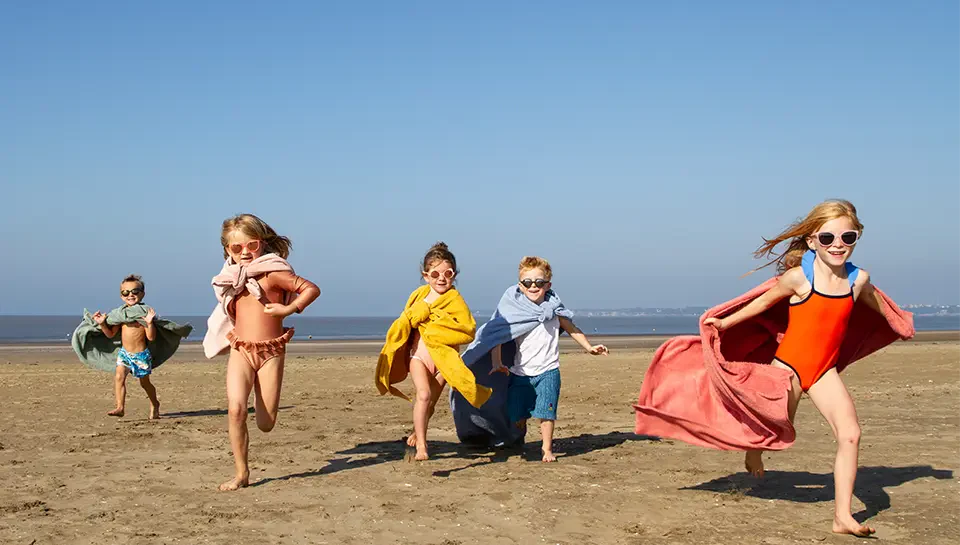
Polarized lenses are particularly advantageous when there is a lot of glare. Water reflects some UV rays, sand does too, and snow even more so. Children's eyes can therefore be exposed even under a cap or in the shade.
Sunglasses with polarized lenses are useful for:
- Beach vacations
- Ski trips
- Water sports
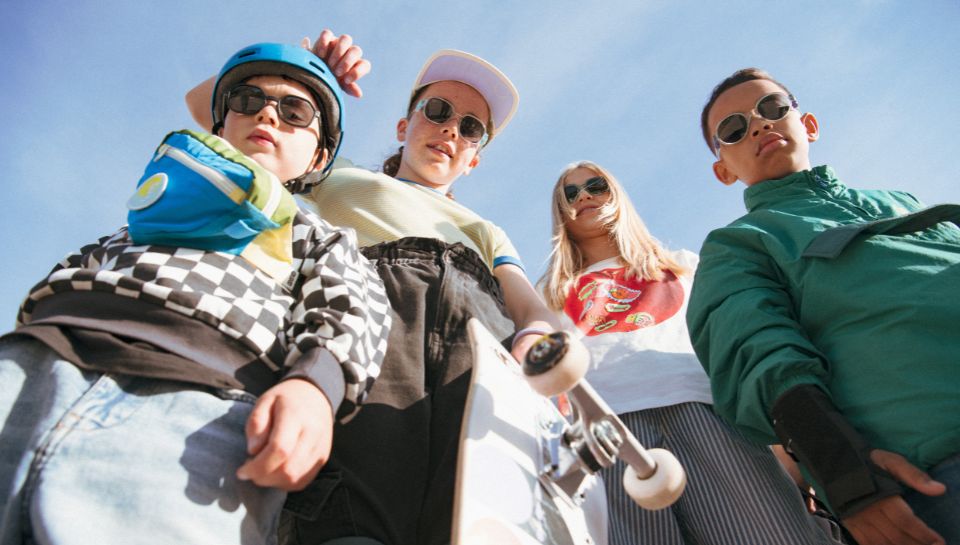
- Outdoor sports
By reducing glare, polarized lenses help the child keep their sunglasses on their face. And for parents, that’s already a small daily victory.
How do you choose the right sunglasses for children?
| Criteria | Why it matters |
| 100% UV Protection | Protects eyes from UVA and UVB rays |
| Category 3 | Suitable for bright light |
| Good coverage | Limits ray exposure from the sides |
| Facial fit | Ensures a secure hold |
| Comfortable temples | Avoids pressure points |
| Age-appropriate | Respects the child's morphology |
| Polarized lenses | Improve comfort against glare |
For little ones, choosing unbreakable frames is often a good idea. They accommodate children's movements while resisting their boundless energy.
Also discover our ranges of glasses made in France, designed to support little everyday adventurers with comfort, style, and good cheer!
What about screens in all this?
Polarized lenses are designed for outdoor light and sunlight reflections. They are not specifically designed for screens. For tablets, computers, or consoles, we refer instead to artificial blue light and glasses adapted for this use.
It is therefore important to distinguish between:
- Sunglasses with polarized lenses for outdoors
- Glasses with anti-blue light lenses for screens
Adopt the right habits:
Even with good glasses, anti-sun habits remain essential: avoid the hottest hours, seek shade, wear a hat, and protect children's fragile skin with sunscreen or anti-UV clothing.
FAQ
Are polarized lenses essential for children?
No, but they provide genuine visual comfort in certain sunny situations.
Do polarized lenses offer better UV protection?
No. Only the quality of the UV filter guarantees protection against the sun's rays.
Can you choose polarized lenses for children under 4?
It is not recommended, as vision is still developing. That is why at Ki ET LA, we only offer polarized lenses on our junior sunglasses (4-12 years old).