





Table of Contents:
- Why is choosing the right hat important?
- Different types of hats for children
- Criteria for choosing a child's hat
- Tips for getting your child used to wearing a hat
- The benefits of a well-chosen hat
Protecting your child's head from the sun is essential, especially during the sunny months. Hats are not just a fashion accessory: they play a key role in sun protection, eye safety, and daily comfort. But with a multitude of models available, which hat should you choose for your child? In this article, we review the different types of hats, their benefits, and our advice for finding the ideal model.
Why is choosing the right hat important?
A hat is an essential accessory to protect your child from heat but also from cold, depending on the season.
In winter, the majority of heat loss occurs through the head, so wearing headgear, like a beanie, helps limit this.
In summer, headgear helps prevent overheating, as well as protecting your child's scalp and face from sunburn or even heatstroke! Children, especially babies, have very sensitive skin and vision. Their lenses are less dense and their irises do not filter as much light as an adult's, making their eyes more exposed to UV rays. A suitable hat can help prevent sunburn on the face, protect the retina, and reduce the long-term risk of eye damage. We also recommend using sunscreen in addition to an anti-UV hat for children.
Different types of hats for children

The bucket hat
The bucket hat is a staple for babies and children. Lightweight, flexible, and often made from breathable materials, it offers optimal protection for the face and neck thanks to its wide, circular brim. Ideal for trips to the beach or outdoor activities, the bucket hat is easy to adjust and stays in place well, even during play.
The camper hat
The camper hat is characterized by a more rigid shape and a slightly wider brim at the back. It offers good head and neck protection while being very stylish. This model is particularly suitable for older children who like to wear a more structured accessory.
The camper cap
The camper cap is an anti-UV cap with a vintage style, ideal for little explorers aged 0 to 4. It combines a slightly rigid rounded visor with foldable side and back flaps that cover the neck and ears depending on sun exposure.
The baseball cap
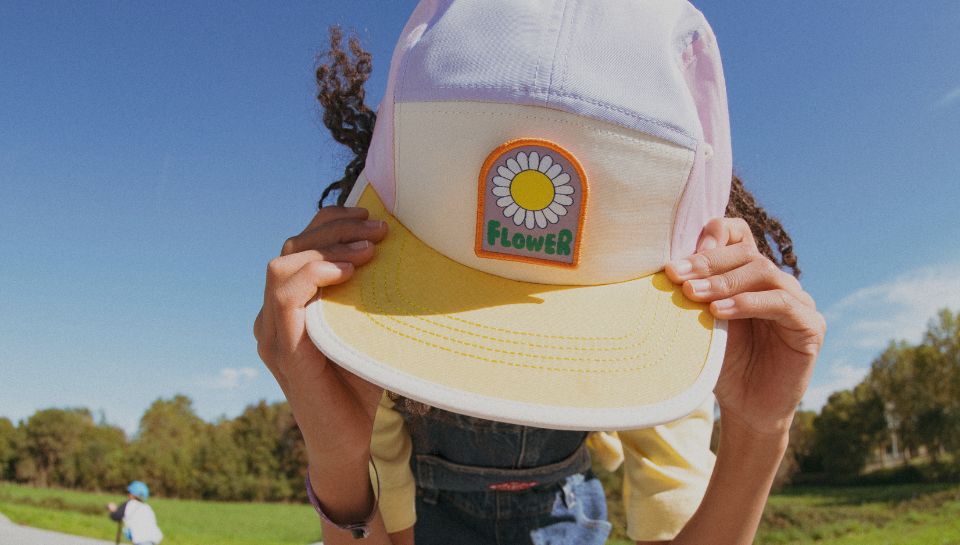
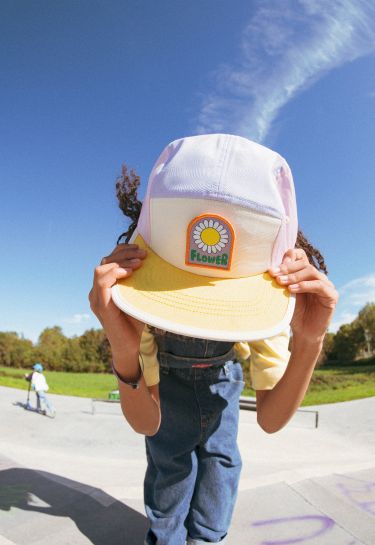
The baseball cap is very popular for children, especially from age 3-4. It mainly protects the forehead and eyes. And by turning it backward, it can also protect the neck. Since it covers less area than a bucket hat, we recommend thoroughly applying sunscreen to any exposed areas.
Criteria for choosing a child's hat
Size and fit
A hat that is too big or too small will not protect effectively. Check that the chosen model fits your child's head circumference well. And for caps, you can check if there is an adjustable Velcro strap at the back, which will allow for a better fit.
Material
Choose headgear with UPF 50+ anti-UV fabric to ensure your child is well protected from the sun's rays. Finally, prioritize breathable, lightweight, and absorbent materials (like cotton or polyester) to prevent your child from getting too hot or sweaty.
Coverage
The brim of the hat is essential: the wider it is, the better the protection for the face and neck. Some models, such as the bucket hat, camper cap, or camper hat, effectively cover these sensitive areas.
Practicality
For babies and young children, a hat that is easy to put on and take off is preferable. Models with an adjustable drawstring or an elastic band at the back help keep the hat in place, even when the child is moving around a lot.
Safety
Avoid decorative accessories that could be obstructive or pose a risk to the child, such as beads or buttons. Opt for reinforced seams and soft edges.
Tips for getting your child used to wearing a hat
- Introduce the hat gradually: start with short periods and increase them progressively.
- Associate the hat with fun activities: for example, wearing the hat to play outside or have a picnic.
- Set an example: children are more inclined to wear a hat if their parents wear one themselves.
- Choose a fun and colorful model: a hat with patterns or colors can motivate the child to keep it on their head.
The benefits of a well-chosen hat
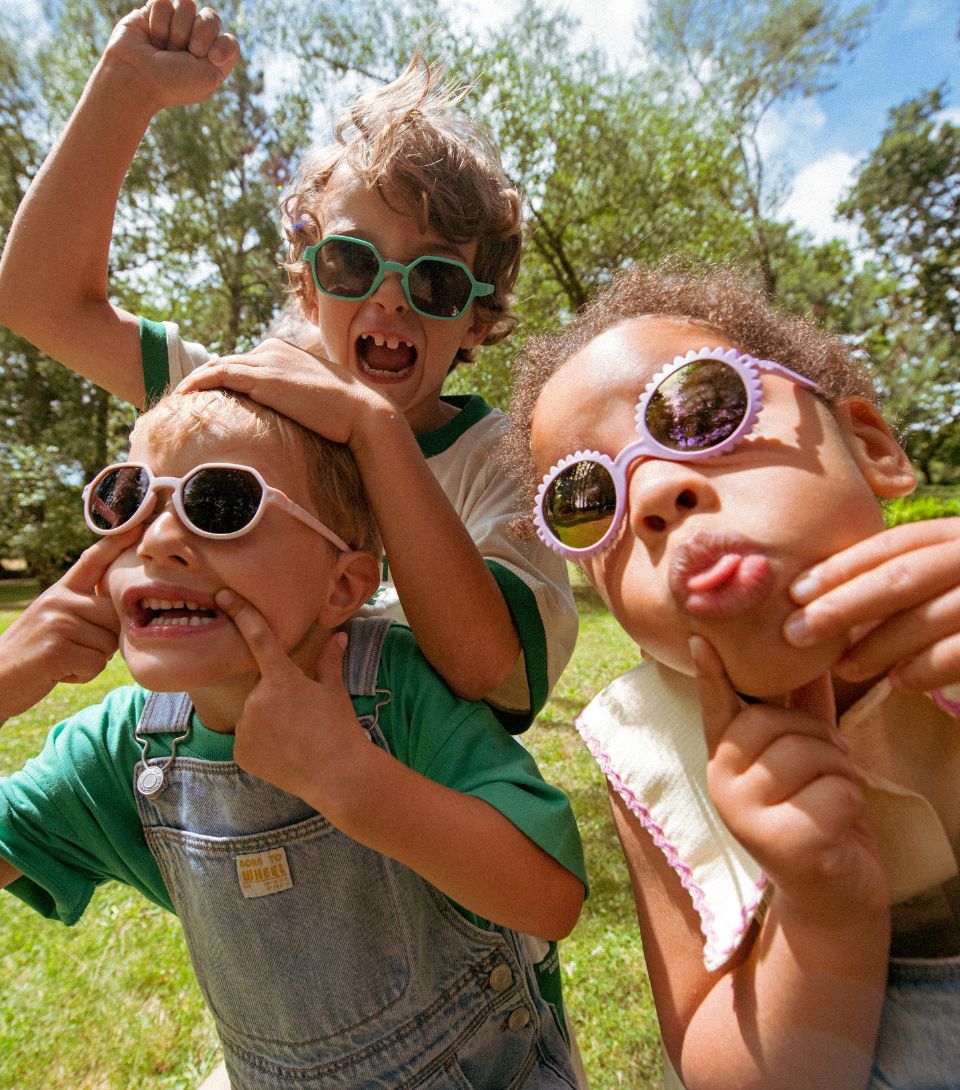
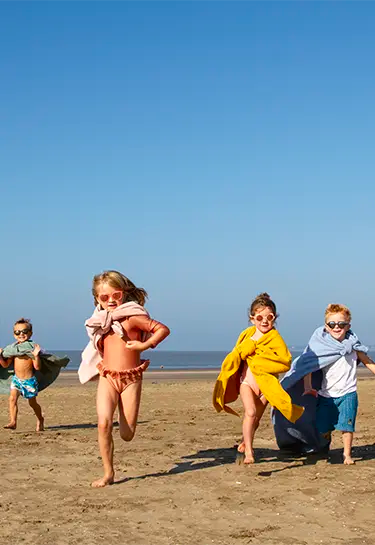
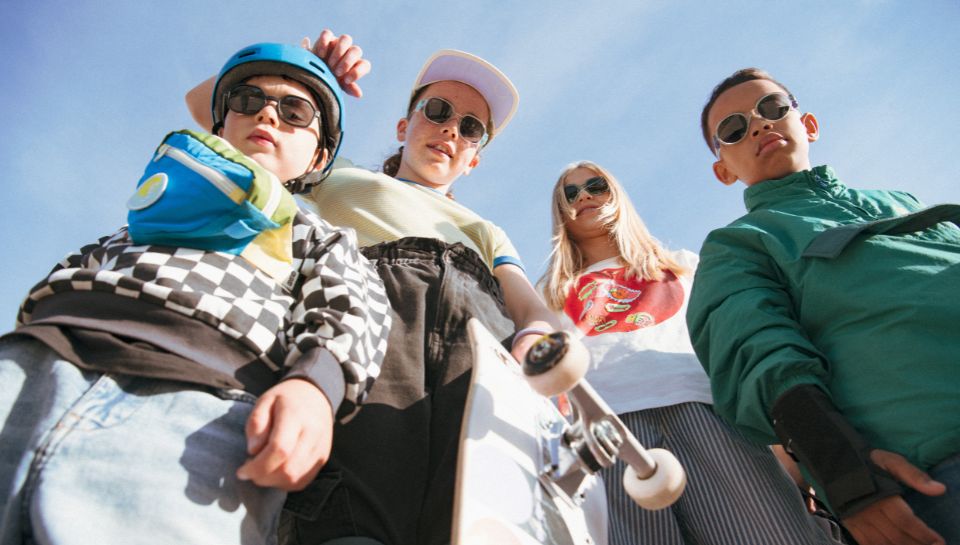
A suitable hat provides comfort, protection, and style. It helps protect children's heads and eyes, limits the risk of UV ray exposure, and reduces eye fatigue caused by glare. It perfectly complements baby or children's sunglasses, thus offering complete protection during outdoor activities.
Choosing the right hat for your child is not just a matter of aesthetics: it is a matter of safety and sun protection. Whether you opt for a bucket hat, a baseball cap, or a five-panel cap, the important thing is to pay attention to the fit, the material, the coverage, and your child's comfort!