




Summary:
- Why protecting children from the sun is essential
- What is anti-UV clothing?
- The benefits of anti-UV clothing for children
- Anti-UV vs. regular clothing: what are the differences?
- The different types of anti-UV clothing for children
- Do I need to apply sunscreen with anti-UV clothing?
- How to choose anti-UV clothing for your child?
- When should you use anti-UV clothing?
- Best practices for optimal sun protection
- Anti-UV clothing, an everyday ally
- In summary
Sun protection for children has become a major concern for parents. A baby's or child's skin is particularly fragile when exposed to the sun, and repeated sunburns during childhood increase long-term skin health risks.
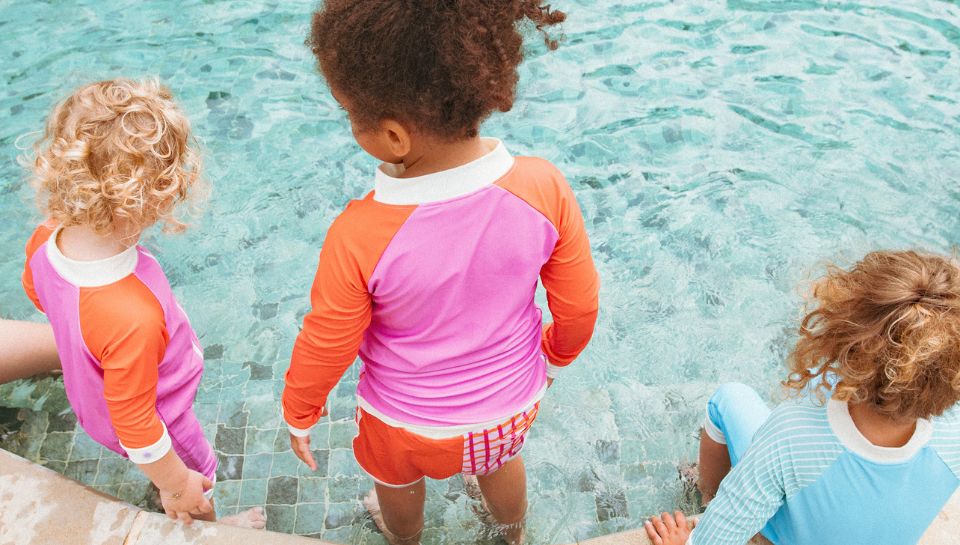
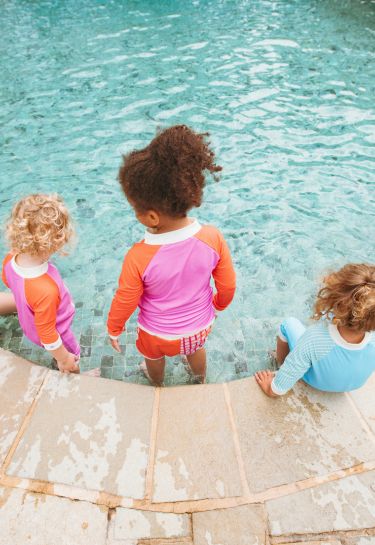
Given this, anti-UV clothing has become an essential ally for outdoor days, whether at the beach, the pool, or even during daily activities. T-shirts, jumpsuits, and anti-UV swimwear combine comfort, freedom of movement, and enhanced sun protection.
In this article, discover everything you need to know about anti-UV clothing for children: how it works, its benefits, how to choose the right pieces, and best practices for use.
Why protecting children from the sun is essential
Before understanding the value of anti-UV clothing, it is important to remember why sun protection for children is a priority.
Immature and vulnerable skin
A child's skin is thinner and contains less melanin than an adult's. As a result:
- UV rays penetrate more easily
- the skin burns more quickly
- natural defense mechanisms are limited
In babies, this sensitivity is even more pronounced.
Long-term solar memory
Dermatologists often refer to "sun capital." Each instance of excessive exposure during childhood can have an impact years later. Specifically, repeated sunburns are linked to an increased risk of skin cancer in adulthood.
What is anti-UV clothing?
Anti-UV clothing is textile specially designed to filter ultraviolet radiation. Unlike regular clothing, it offers measurable and certified protection.
The role of the UPF rating
The performance of anti-UV clothing is indicated by the UPF (Ultraviolet Protection Factor) rating.
UPF50 clothing means that only 1/50th of UV rays pass through the fabric, meaning a filtration rate of approximately 98%. This is currently the highest level of protection recommended for children.
How do clothes block UV rays?
Several factors contribute to this protection:
- weave density
- fiber composition
- specific anti-UV treatments
- textile color and thickness
Technical clothing retains this protection even when wet or stretched, which is particularly important for water-based activities.
The benefits of anti-UV clothing for children
Using anti-UV clothing offers numerous benefits for both parents and children.
1. Constant sun protection
Unlike sunscreen, which fades with sweat, water, or rubbing, clothing offers a permanent barrier on covered areas.
This significantly limits the risk of sunburn.
2. Peace of mind for parents
Applying sunscreen to an active child can quickly become difficult. Anti-UV clothing simplifies the routine and reduces the risk of missed spots, especially on the back, shoulders, or neck.
3. An ideal solution for the beach and pool
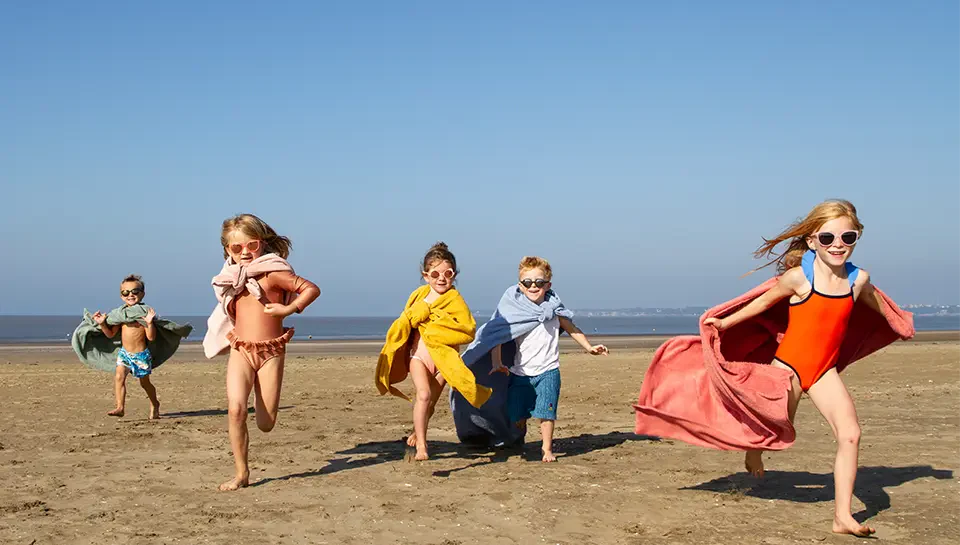
Anti-UV swimwear for children is particularly popular because it allows them to:
- play and swim in the water
- build sandcastles
- engage in water sports
all while maintaining effective protection.
4. Less exposure to cosmetic products
Although sunscreen remains necessary for exposed areas, clothing helps reduce both the amount of cream used and the frequency of application.
A significant advantage for sensitive skin!
5. Thermal comfort and breathability
Modern textiles are designed to be lightweight, breathable, and quick-drying. Contrary to popular belief, anti-UV clothing can even help regulate body temperature.
6. Freedom of movement
Today's anti-UV clothing for children is designed to support play and activity: stretchy materials, ergonomic fits, and adapted designs.
This allows children to keep enjoying themselves with total freedom, without worrying about sun protection.
Anti-UV vs. regular clothing: what are the differences?
Many parents believe a simple t-shirt is enough. However, several factors distinguish technical clothing from standard clothing.
|
Criteria |
Regular clothing |
Anti-UV clothing |
|
Measured protection |
No |
Yes (UPF) |
|
Wet protection |
Decreases significantly |
Maintained |
|
Breathability |
Variable |
Optimized |
|
Protection durability |
Not guaranteed |
Designed to last |
A wet t-shirt can lose up to half of its protective capacity, unlike UPF50+ clothing.
The different types of anti-UV clothing for children
The range has diversified significantly in recent years, making it possible to cover all needs.

Anti-UV t-shirts
Ideal for the beach or sports activities, they protect the torso, back, and shoulders.
We recommend choosing a UPF50+ anti-UV t-shirt with long sleeves to cover your child's fragile skin as much as possible. Ki ET LA’s anti-UV t-shirt meets all these criteria.
Anti-UV shorts
Anti-UV shorts are a perfect piece to complement sun protection for children while still maintaining great freedom of movement.
Designed in technical UPF50 certified materials, they effectively protect the skin from sun rays during play at the beach, the pool, or other summer activities. Ki ET LA’s anti-UV shorts are lightweight and UPF50+ certified.
Anti-UV jumpsuits
Highly popular for babies and young children, they cover a large part of the body and limit the areas requiring sunscreen.
At Ki ET LA, we offer rompers from 0 to 4 years old, as well as jumpsuits for girls from 4 to 12 years old, which are better adapted to that age group. Both models are UPF50+ certified and feature long, ultra-covering sleeves.
Anti-UV accessories
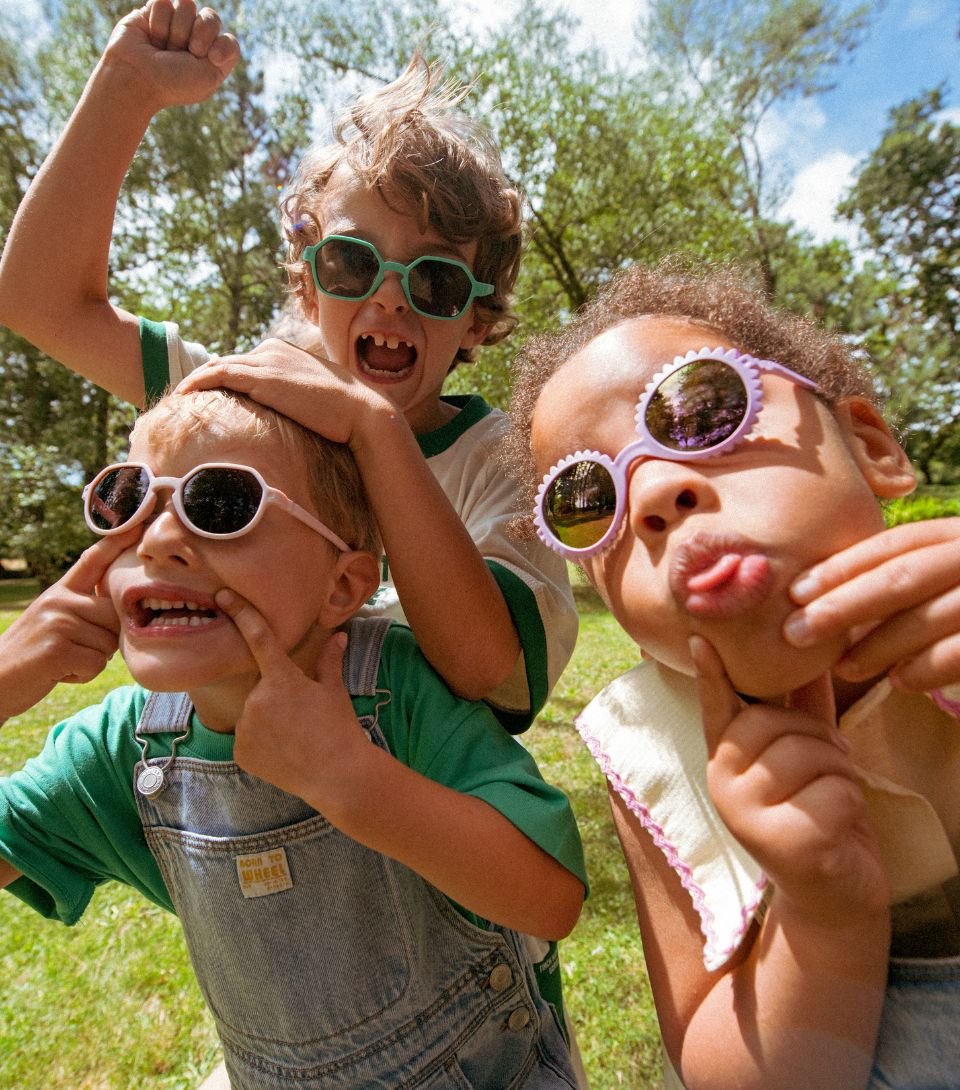
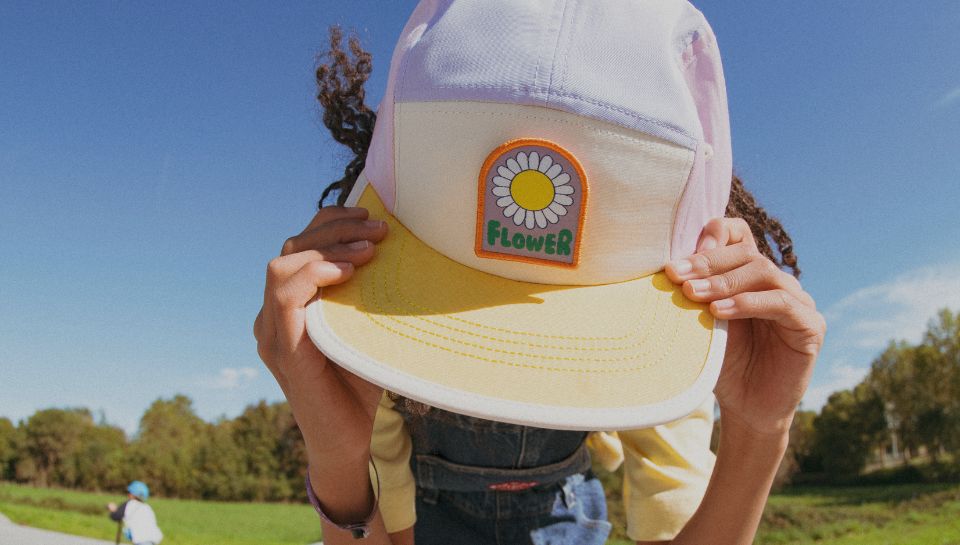
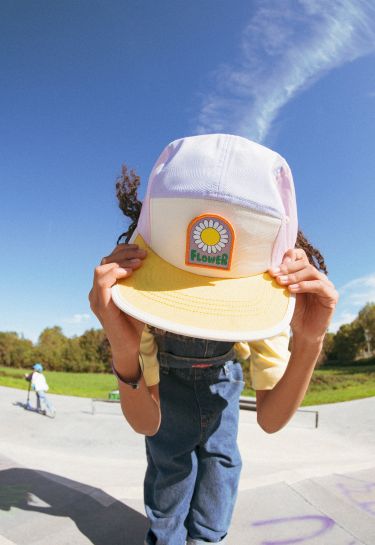
In addition, we recommend opting for adapted anti-UV accessories: hats/caps and sunglasses.
UPF50+ anti-UV hats, especially those with wide brims, protect the face, ears, and neck while remaining lightweight, comfortable, and stylish.
Anti-UV caps offer a practical alternative for everyday use.
Finally, category 3 sunglasses are essential to protect eyes from glare and UV rays during outdoor activities.
Together, these accessories and anti-UV clothing strengthen protection against sun rays.
Do I need to apply sunscreen with anti-UV clothing?
Yes. Anti-UV clothing does not completely replace sunscreen.
They protect the covered areas, but it remains necessary to apply cream to:
- the face
- the hands
- the legs, if exposed
- the neck, if exposed
Combining both approaches constitutes the most effective strategy.
How to choose anti-UV clothing for your child?
Several criteria help you make the right choice.
1. Check the UPF rating
Always prioritize UPF50 clothing for optimal protection.
2. Observe the fit
Good coverage is essential: long sleeves, high collars, sufficient length.
3. Prioritize comfort
A child will only wear a garment if it is comfortable. Flexibility, lightness, and softness are key.
Additionally, we recommend garments with zippers for t-shirts or jumpsuits and adjustable drawstrings for shorts to make them easier to put on.
4. Consider the style
From age 4-5, aesthetics become important to the child.
We recommend involving your child in choosing the style (shape, colors, patterns...), as this will make them more likely to wear it.
You can also involve them more in their sun protection through the anti-UV sensor found on all Ki ET LA anti-UV products. The more the sensor (in the shape of a sun) turns purple, the higher the UV levels, meaning extra protection is needed. A fun way to get them involved in their own sun protection!
When should you use anti-UV clothing?
Contrary to popular belief, anti-UV clothing isn't just for vacations.
They are useful:
- at the park
- during outdoor sports activities
- while walking
- at school during recess
- at the sea, at the pool
- in the mountains
- while traveling
- etc.
UV rays are present even on cloudy days.
Best practices for optimal sun protection
To effectively protect a child from the sun:
- combine anti-UV clothing and sunscreen
- avoid exposure between 12:00 PM and 4:00 PM
- prioritize the shade
- have them wear a hat and sunglasses
- hydrate regularly
Sun protection is a comprehensive approach.
Anti-UV clothing, an everyday ally
Today, anti-UV clothing is part of a sustainable prevention strategy. It addresses several issues:
- health
- practicality
- comfort
- teaching good habits
Many specialized brands, including Ki ET LA, develop collections designed to support children in all their outdoor adventures.
In summary
Anti-UV clothing represents a modern and effective solution for protecting children's fragile skin from the sun. Thanks to their UPF50 rating, they offer a reliable barrier against UV radiation while ensuring comfort and freedom of movement.
Whether in the form of a t-shirt, jumpsuit, or anti-UV swimwear, they help secure moments of play and relaxation outdoors while simplifying the routine for parents.
Combined with sunscreen and good exposure habits, they become an essential pillar of sun protection, starting from a very young age.