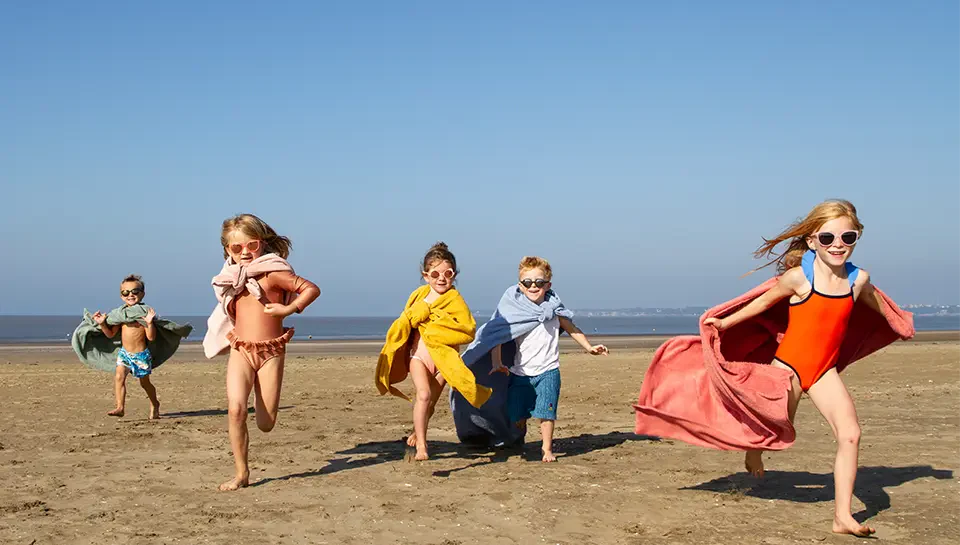
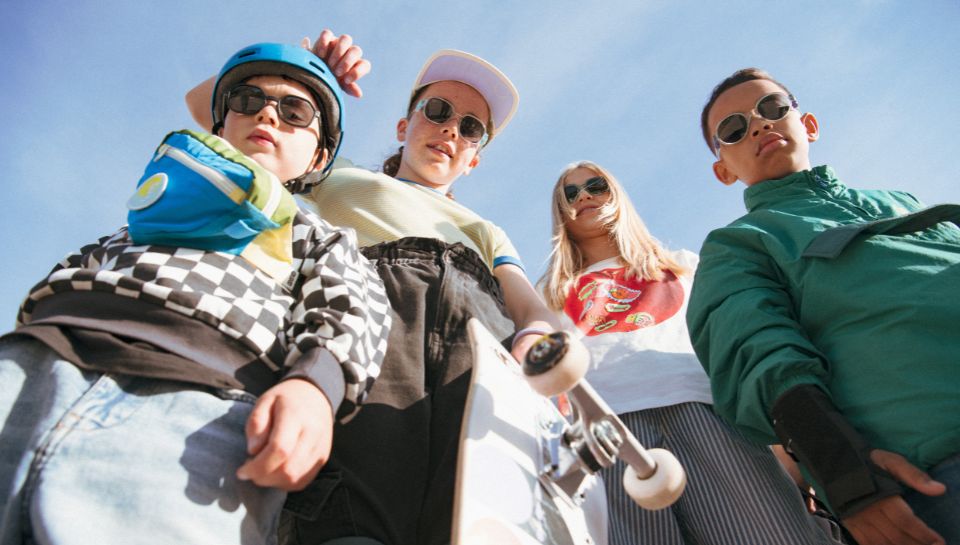
Welcome to our complete guide to keeping your little ones safe in the bright sun and against blue light from screens. At Ki ET LA, we understand the importance of taking preventative measures to protect your children's visual health. Discover our practical advice below for optimal protection.

Quel maillot de bain pour son bébé ?
08.07.2026

Which swimsuit for your baby?

Choosing a swimsuit for a baby is about more than just style. At this age, protection against the sun and UV rays is essential to safeguard the health of the...

Read more
08.07.2026

Which swimsuit for your baby?

Choosing a swimsuit for a baby is about more than just style. At this age, protection against the sun and UV rays is essential to safeguard the health of the...

Read more
Lunettes de soleil : faut-il choisir des verres polarisés pour les enfants ?
30.06.2026

Sunglasses: should you choose polarized lenses ...

When the sun is shining, children's eyes need real protection. Between frames, lens categories, light management, and glare, the choice can quickly become complex for parents. Among the options available,...

Read more
30.06.2026

Sunglasses: should you choose polarized lenses ...

When the sun is shining, children's eyes need real protection. Between frames, lens categories, light management, and glare, the choice can quickly become complex for parents. Among the options available,...

Read more
Norme UPF, EN… Tout savoir sur les chapeaux enfants anti-UV
30.06.2026

UPF rating, EN... Everything you need to know a...

When we talk about sun protection, we often think of sunscreen… but a hat remains an essential ally. For children, the skin is thinner, more fragile, and therefore more sensitive...

Read more
30.06.2026

UPF rating, EN... Everything you need to know a...

When we talk about sun protection, we often think of sunscreen… but a hat remains an essential ally. For children, the skin is thinner, more fragile, and therefore more sensitive...

Read more
cancer-peau
12.06.2026

Skin cancer: understanding the risks and protec...

Skin cancer is the most common cancer worldwide. In Europe, more than 2 million cases are diagnosed each year, and this figure continues to rise. UV rays are responsible for...

Read more
12.06.2026

Skin cancer: understanding the risks and protec...

Skin cancer is the most common cancer worldwide. In Europe, more than 2 million cases are diagnosed each year, and this figure continues to rise. UV rays are responsible for...

Read more
lunettes enfants categorie 3 uv400
27.05.2026

Why choose children's sunglasses with UV400 Cat...

Choosing a pair of sunglasses for your child is not just about the look. When the sun is strong, little ones' eyes need real protection, designed for their age, their...

Read more
27.05.2026

Why choose children's sunglasses with UV400 Cat...

Choosing a pair of sunglasses for your child is not just about the look. When the sun is strong, little ones' eyes need real protection, designed for their age, their...

Read more
UVA / UVB : comment bien protéger son enfant du soleil ?
19.05.2026

UVA / UVB: how to properly protect your child f...

When the sun comes out, days spent outdoors multiply: parks, the beach, vacations, family outings… Children love playing outside, and it is excellent for their development. However, their skin and...

Read more


19.05.2026

UVA / UVB: how to properly protect your child f...

When the sun comes out, days spent outdoors multiply: parks, the beach, vacations, family outings… Children love playing outside, and it is excellent for their development. However, their skin and...

Read more

You see of {"one"=>"{{ count }} product", "other"=>"{{ count }} products", "many"=>"{{ count }} products"}

Everything you need to know about UV

The sun emits ultraviolet (UV) rays to which we are all exposed, whether the sky is clear or cloudy.

  • UVB rays reach the surface of the skin and are responsible for tanning and sunburn.
  • UVA rays penetrate deep into tissues (eye or skin) and accelerate their aging.

Before the age of 12, children's eyes are more permeable to UV rays. They must therefore be protected from a young age. Over a lifetime, 70% of total UV exposure is experienced before the age of 17. Children are therefore the most exposed.

On a boat, on the beach or during winter sports, be careful because

  • Water reflects 10 to 30% of UV rays.
  • Sand reflects more than 20% of UV rays.
  • Snow reflects 85% of UV rays.

Good Anti-UV Reflexes

How to protect yourself effectively from the sun?

  • Avoid exposure to the sun in the middle of the day (12 p.m.-4 p.m.)
  • Renew the application of index 50 sunscreen every 2 hours
  • Use sunglasses, hats with large visors, and UPF 50+ anti-UV textiles for all outdoor activities
  • Favor shaded areas

For more information, do not hesitate to read our page dedicated to sun protection for the eyes.

How to choose glasses?

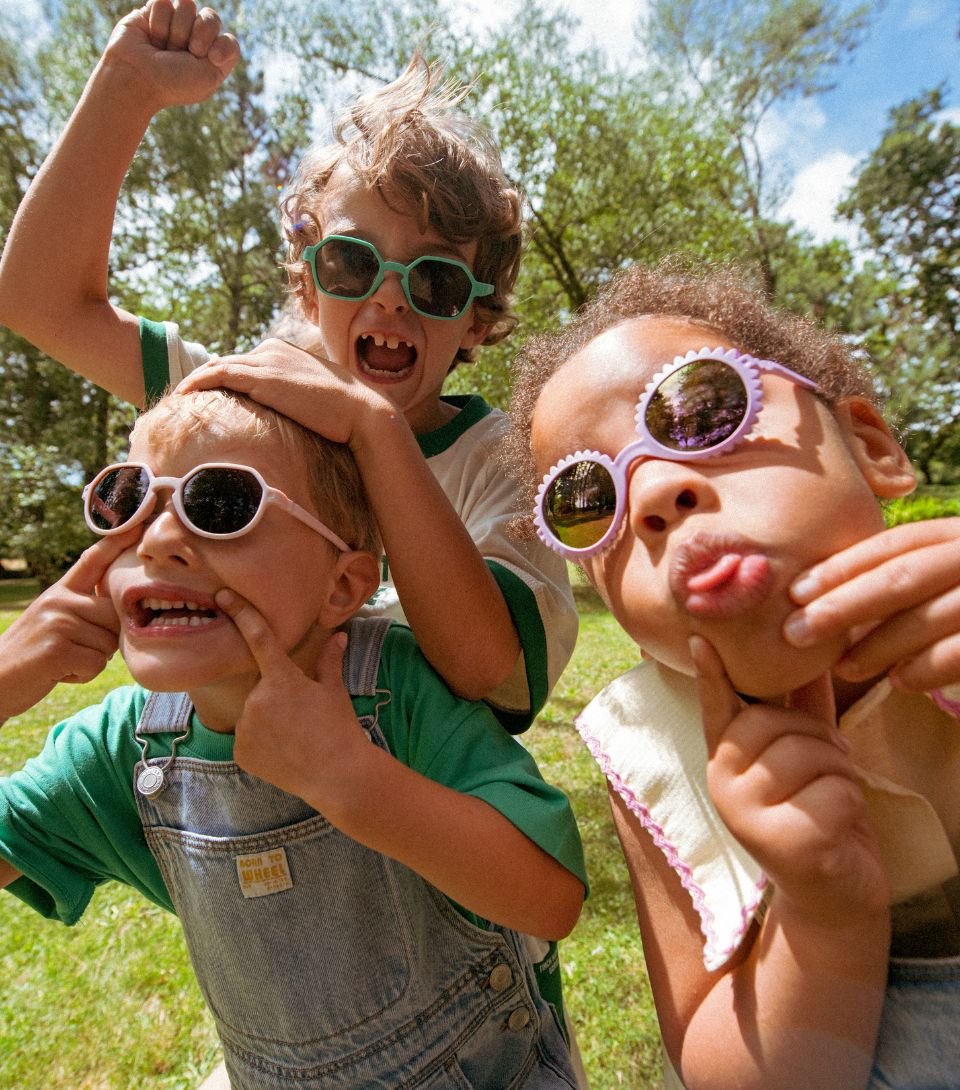
Children always look upwards, so glasses must cover the eye perfectly.

Opt for CE-certified lenses, category 3 or 4, ensuring maximum UV filtration.

Select sunglasses that are well suited to your child's age and body shape. Finally, choose lenses that filter 100% of UV rays.

At what age should a child wear sunglasses?

Before 1 year, 90% of UVA and more than 50% of UVB reach the retina of the little ones, it is therefore essential to have your baby wear glasses from their first exposures.

What does Category 3 or 4 mean?

This is the protection category for the lenses of your sunglasses. Lens categories are classified from 0 to 4. For more information, do not hesitate to read our page dedicated to UV categories of sunglasses.

The lenses of Ki ET LA sunglasses are category 3 or 4 and offer maximum UV filtration. They also have a special anti-blue light treatment to reduce glare.

How to choose your hat?

  • Sunscreen, umbrellas or parasols do not replace glasses and a hat.
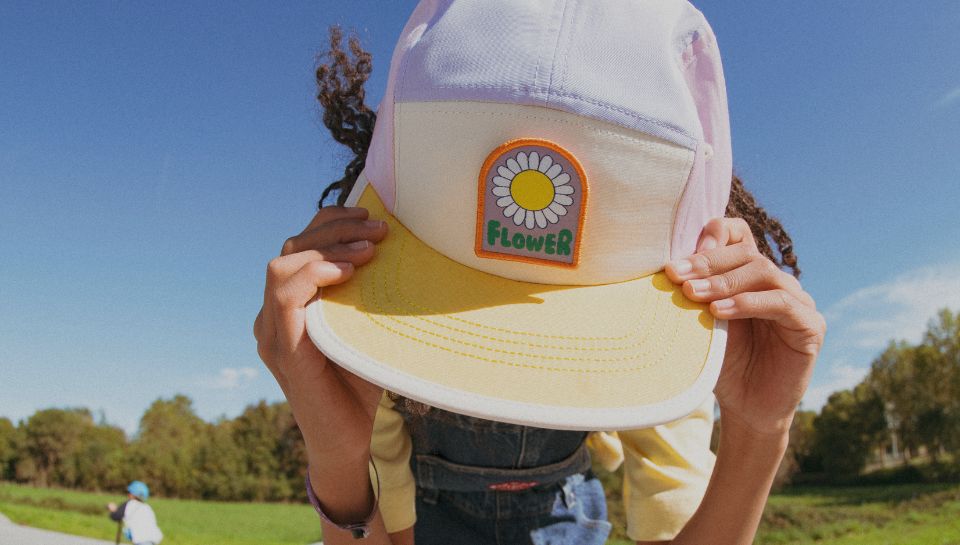
  • Choose a hat with large visors that protect the face, neck and shoulders as well.
  • Choose Anti-UV textiles offering maximum UPF 50+ protection.
  • Select natural materials and comfortable textiles so that the child is comfortable and keeps his hat on his head.

Why choose an Anti-UV hat rather than a classic cotton hat?

In general, a standard summer fabric is around a UPF 6 and blocks very little UV. The Ki ET LA hat with Anti-UV UPF 50+ textile guarantees to block maximum UV rays. Its wide visors help protect the shoulders and/or faces of little ones.

What do UPF and UPF 50+ mean?

UPF stands for “Ultraviolet Protection Factor”. It is an index defined for textiles with a European standard, it indicates the percentage of UV filtration

UPF 50+ guarantees very high protection since this rate blocks more than 97.5% of UVA and UVB rays. The Ki ET LA Kapel hat is made of UPF 50+ cotton: the maximum protection index against UV rays.

What is the difference between UPF and SPF?

SPF stands for “Sunburn Protection Factor”. SPF is the index which represents the level of protection of a sun product (cream, milk, mist, etc.).

UPF stands for “Ultraviolet Protection Factor” and indicates the percentage of UV filtration by the textile.

Each solar index corresponds to a percentage of UVB blocked.

The UPF 50+ rating of Ki ET LA hats and caps is the highest UV protection available today.

What does the Oeko Tex label really guarantee?

All Ki ET LA hats benefit from the Oeko Tex label. This label guarantees the human-ecological qualities of textiles: free from products toxic to the body and the environment.

All about Blue Light

The blue light emitted by the sun is at a low level, it is a source of energy and promotes well-being.

On the other hand, artificial blue light emitted by electronic devices is very harmful to the eyes.

Artificial blue light is emitted by computer screens, tablets, televisions, consoles, mobile phones, LED lights and floods our daily lives.

Blue light penetrates the eye right up to the retina, disrupting image formation. The eye muscles must therefore continually adjust to adapt, tiring our eyes.

This artificial blue light causes:

  • Eyestrain
  • Itchy eyes
  • Headaches
  • Mood and sleep disorders

In the long term, the effects of blue light can be serious.

Children aged 6 to 12 spend an average of 3 hours a day in front of screens. The new generations are the most exposed.

Best Practices with Screens

How to effectively protect yourself from harmful screen light?

  • Avoid overexposure to screens. Health professionals recommend not using screens before the age of 2, using screens for less than 1 hour per day before the age of 4 and less than 2 hours per day after the age 5 years old.
  • In front of each screen, systematically protect your child's eyes.

How to choose your anti-blue light glasses?

  • Choose lightweight, comfortable glasses so that your child gets used to wearing them systematically
  • Choose glasses filtering between 40 and 50% of blue light.

For more information, do not hesitate to read our dedicated page on the effects of blue light on the eyes